Grace Hannell
Dawns!
2023 - ongoing
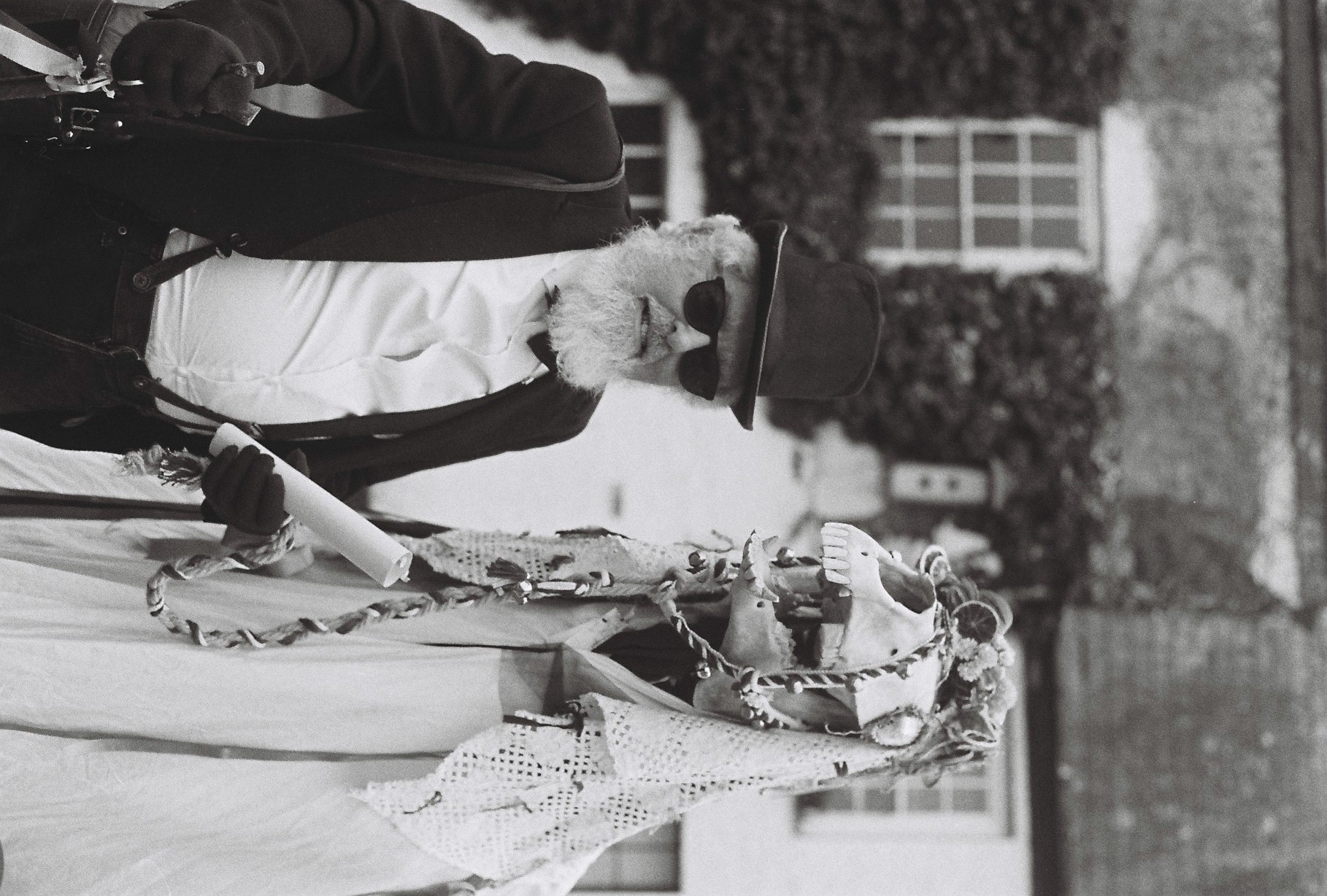
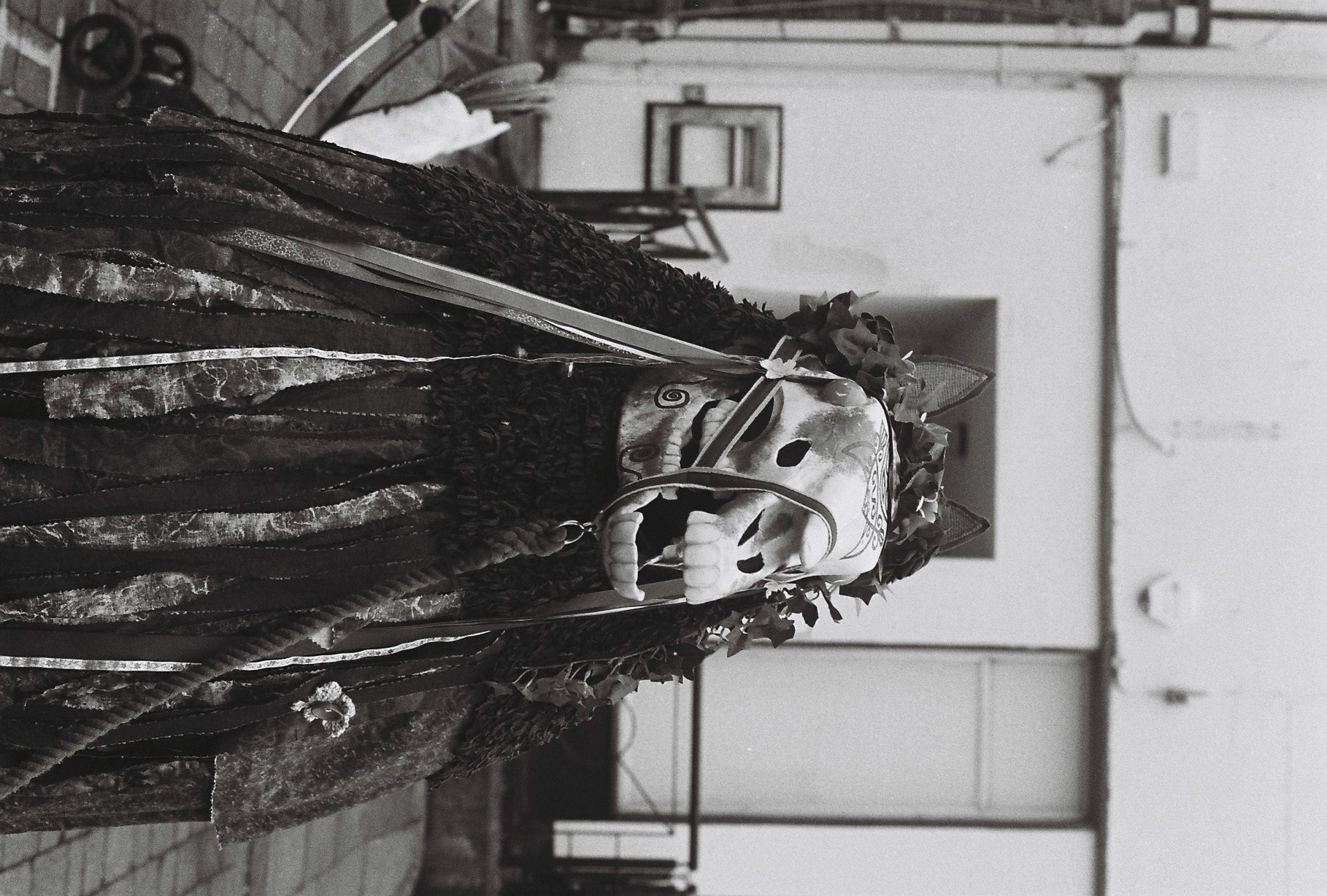
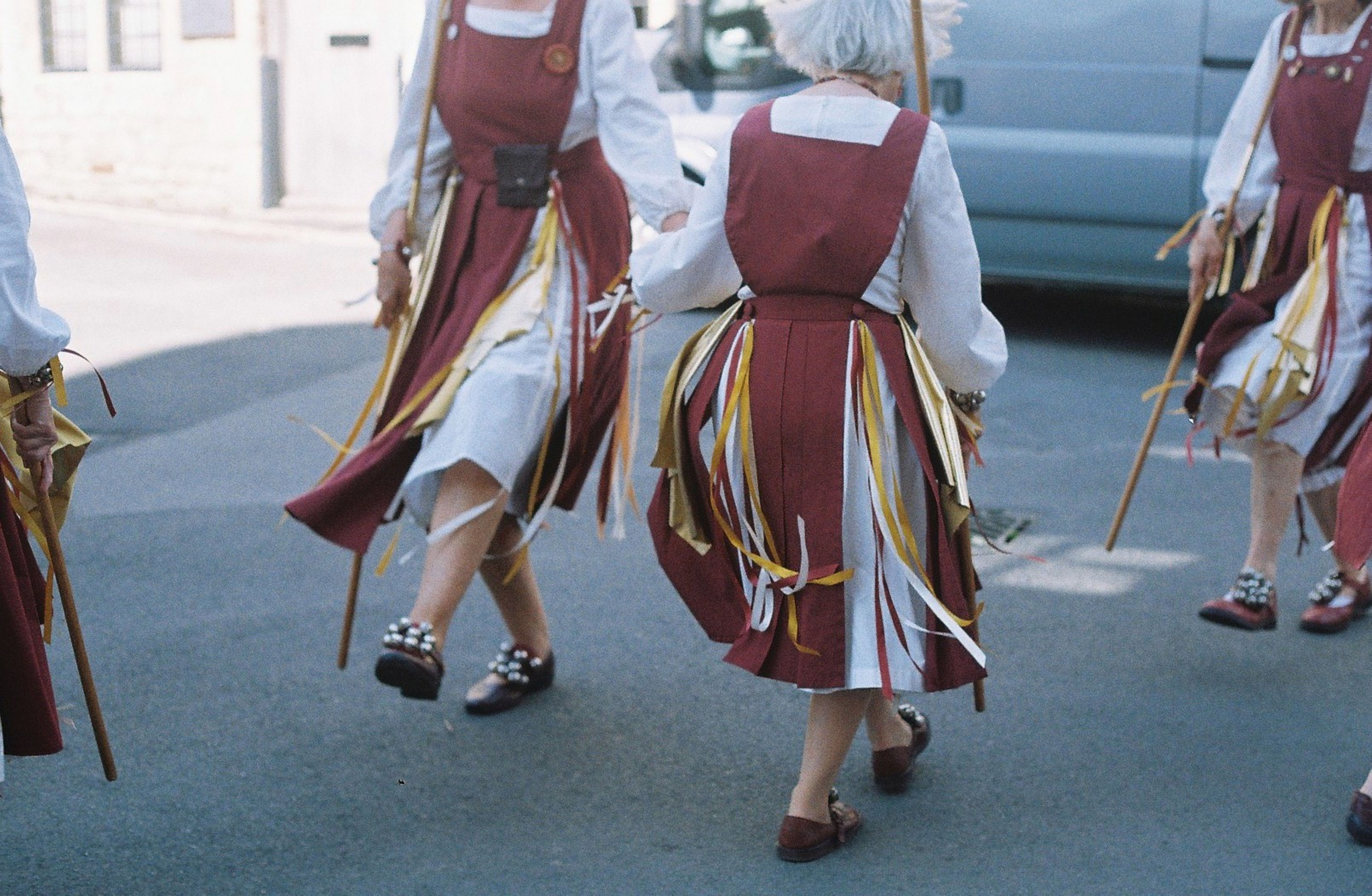
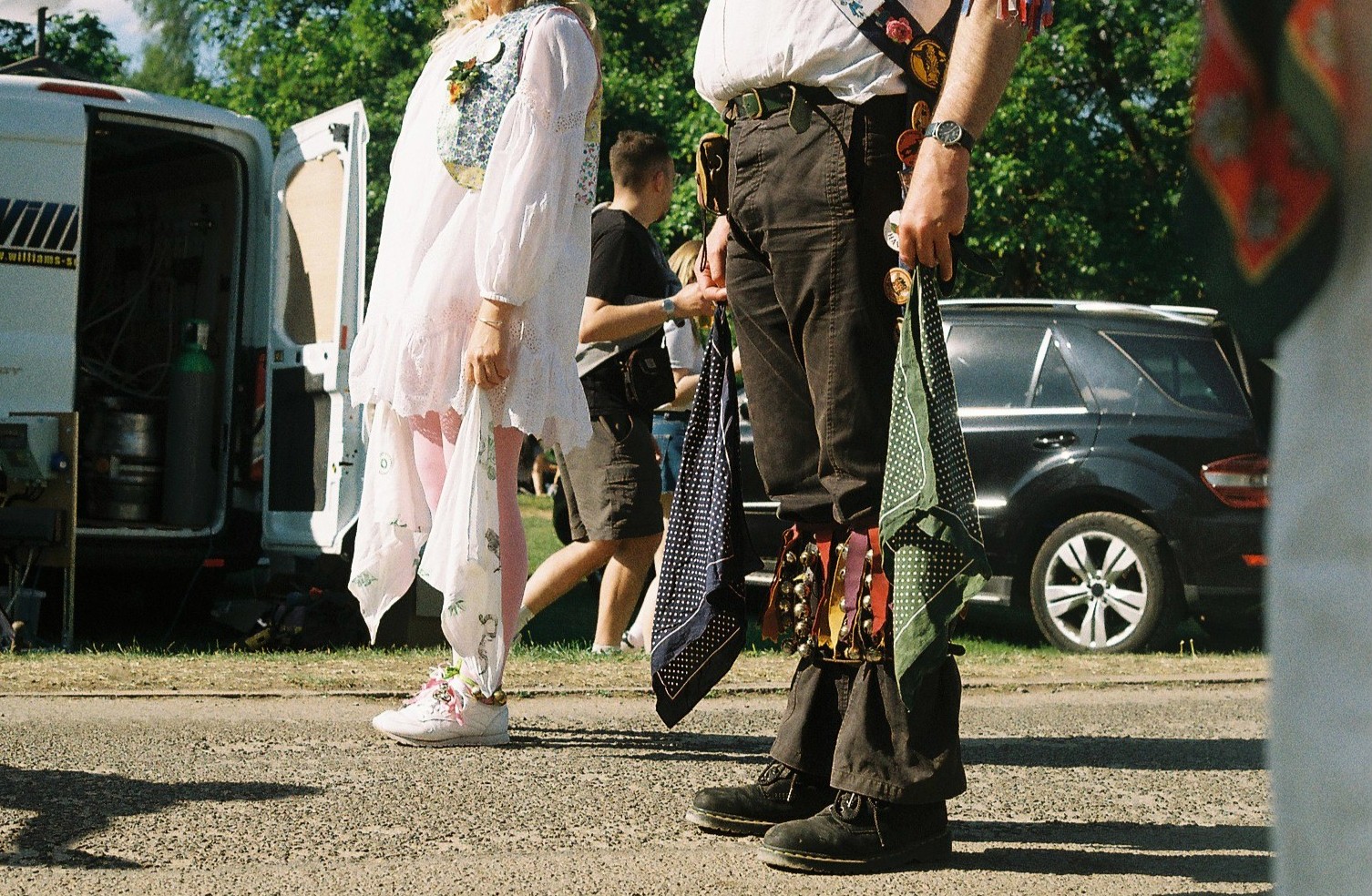
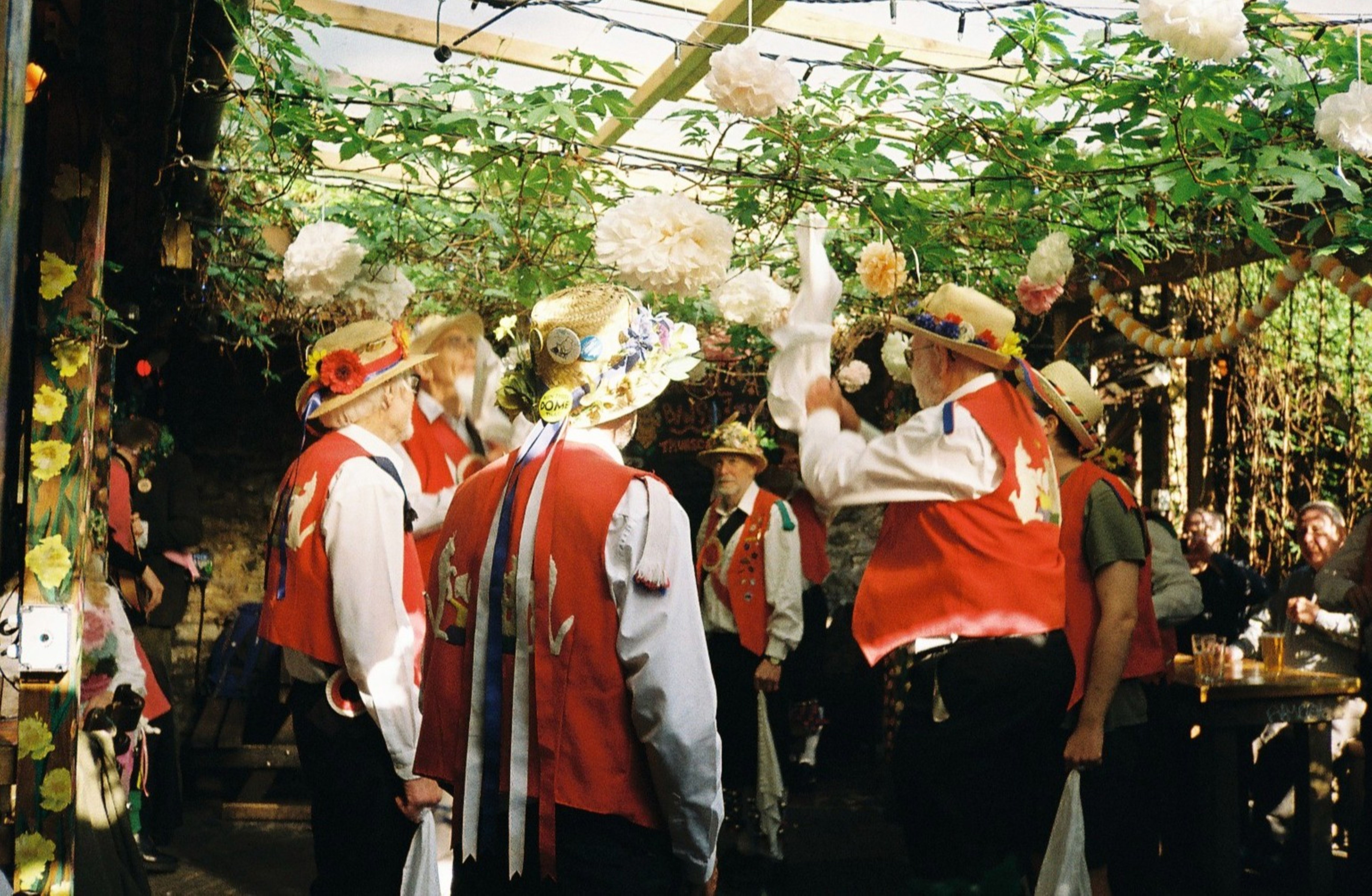
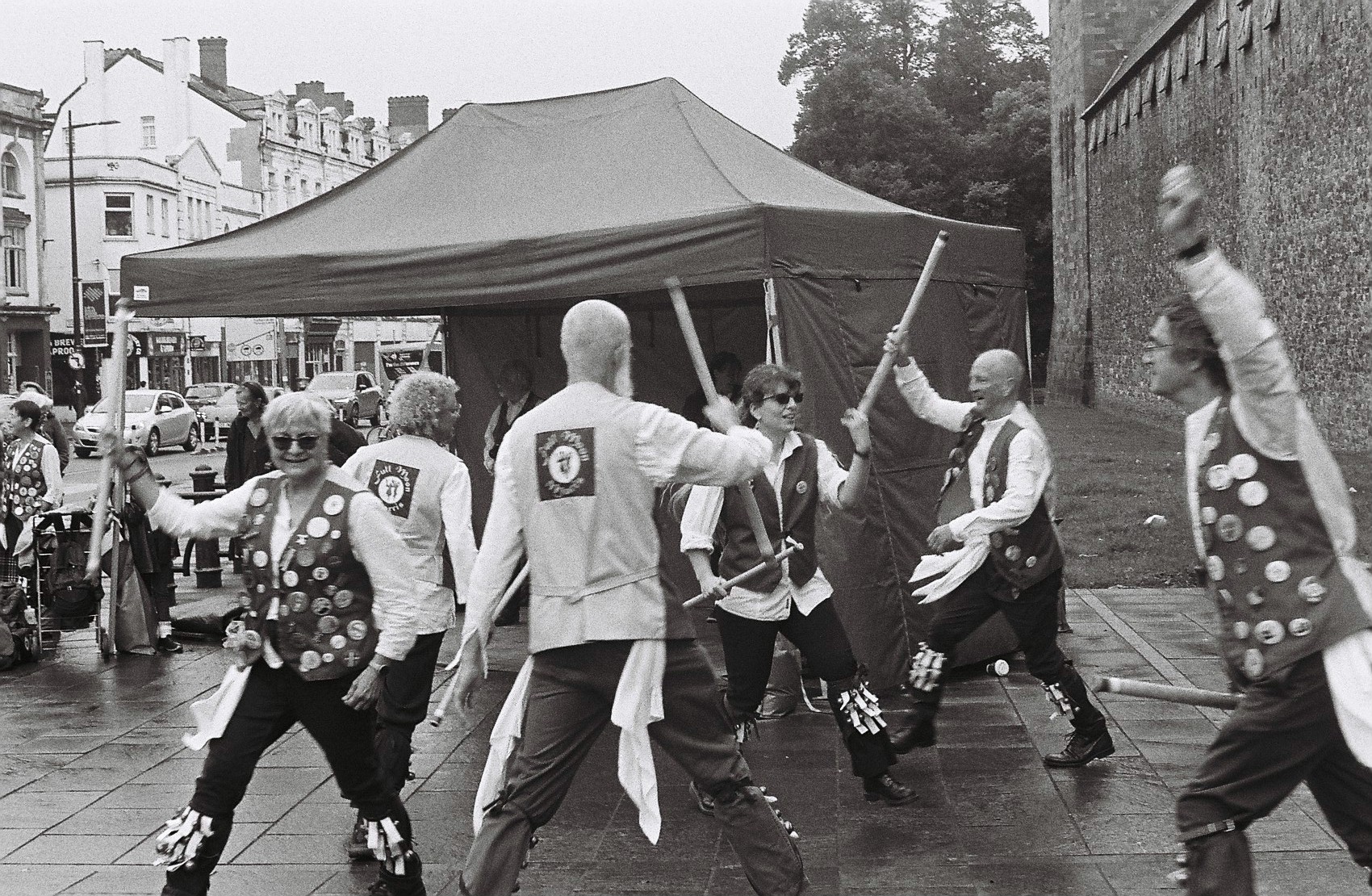
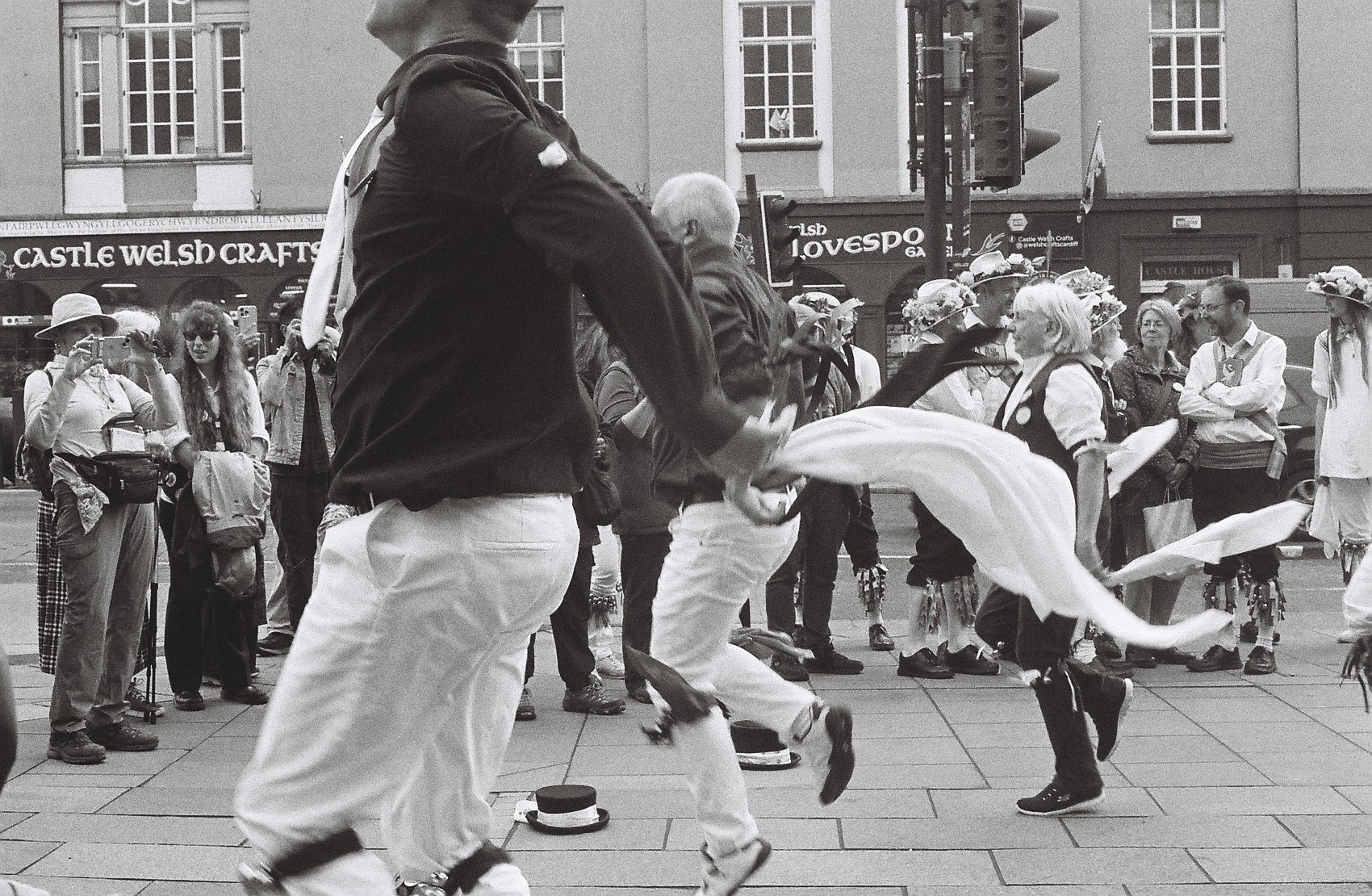
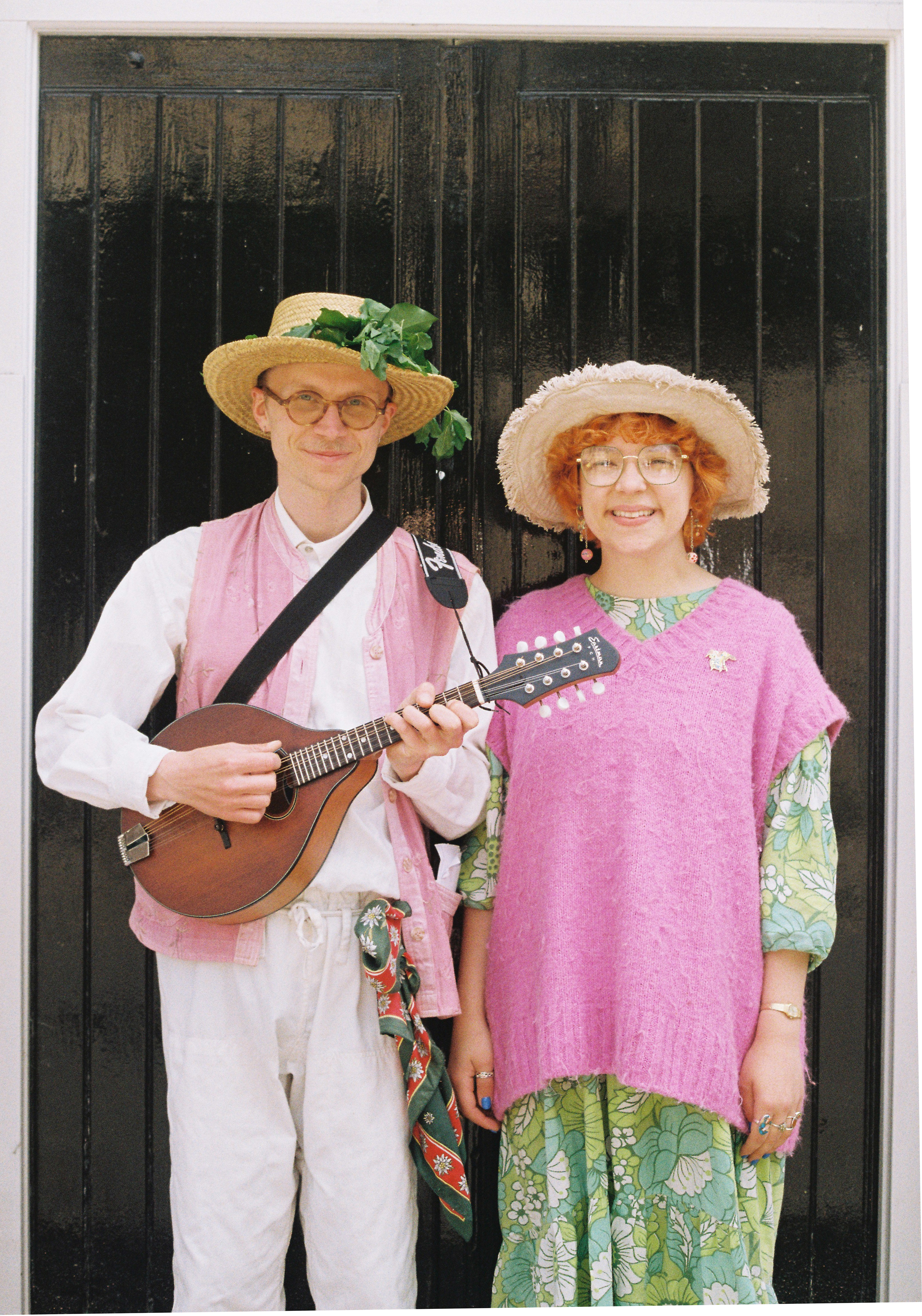
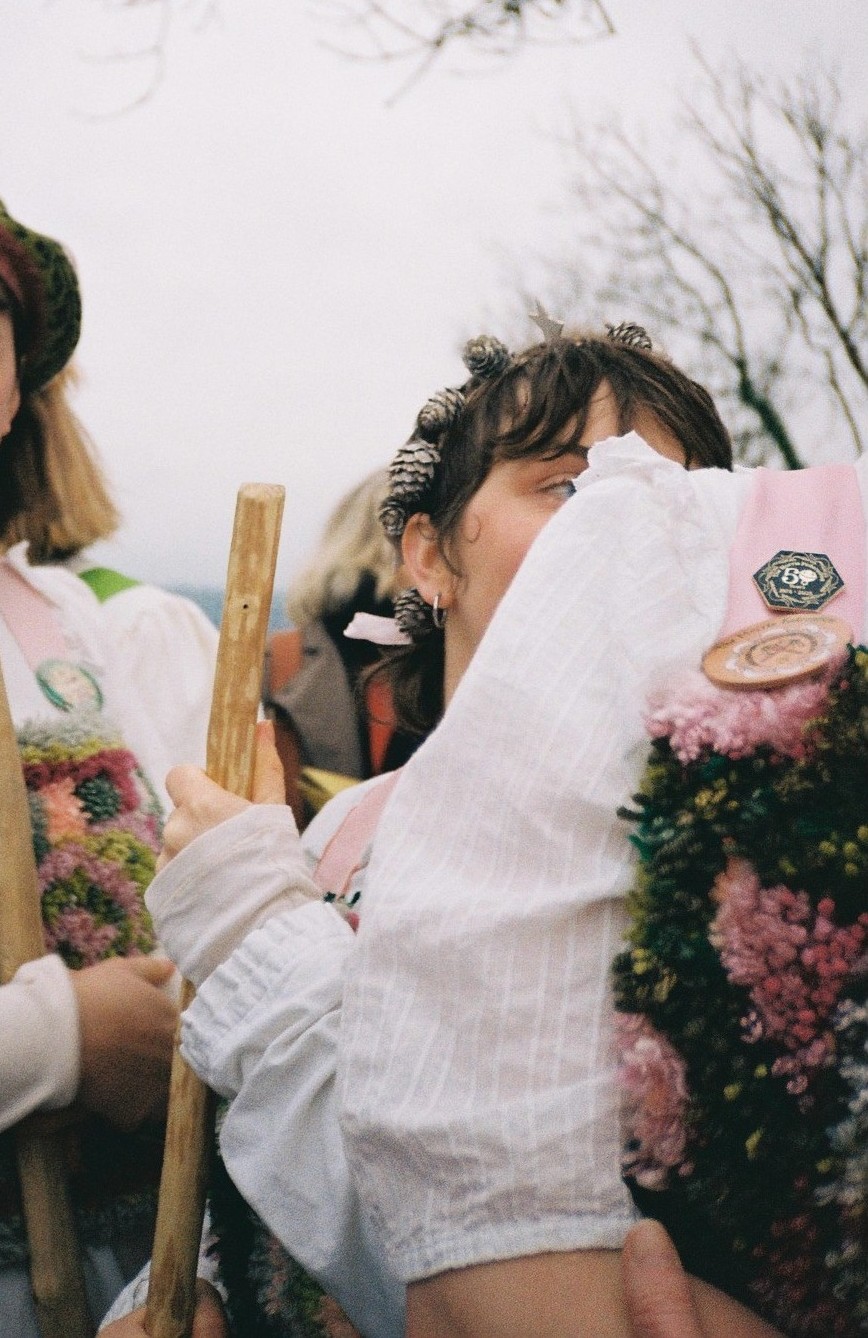
Dawns was born out of a lifelong love of folk dancing, music and traditional practices, and the new need to start documentin its resurgence when I finally got involved as a Cotswold Morris dancer. A new-found need has arisen for folk traditions,
festivals and ways to celebrate nature and mark the changing seasons. Traditions are evolving, being made new, and staying ancient at the same time. Dance is one of our most common languages, it is a primal and basic
instinct – to move when we feel moved.
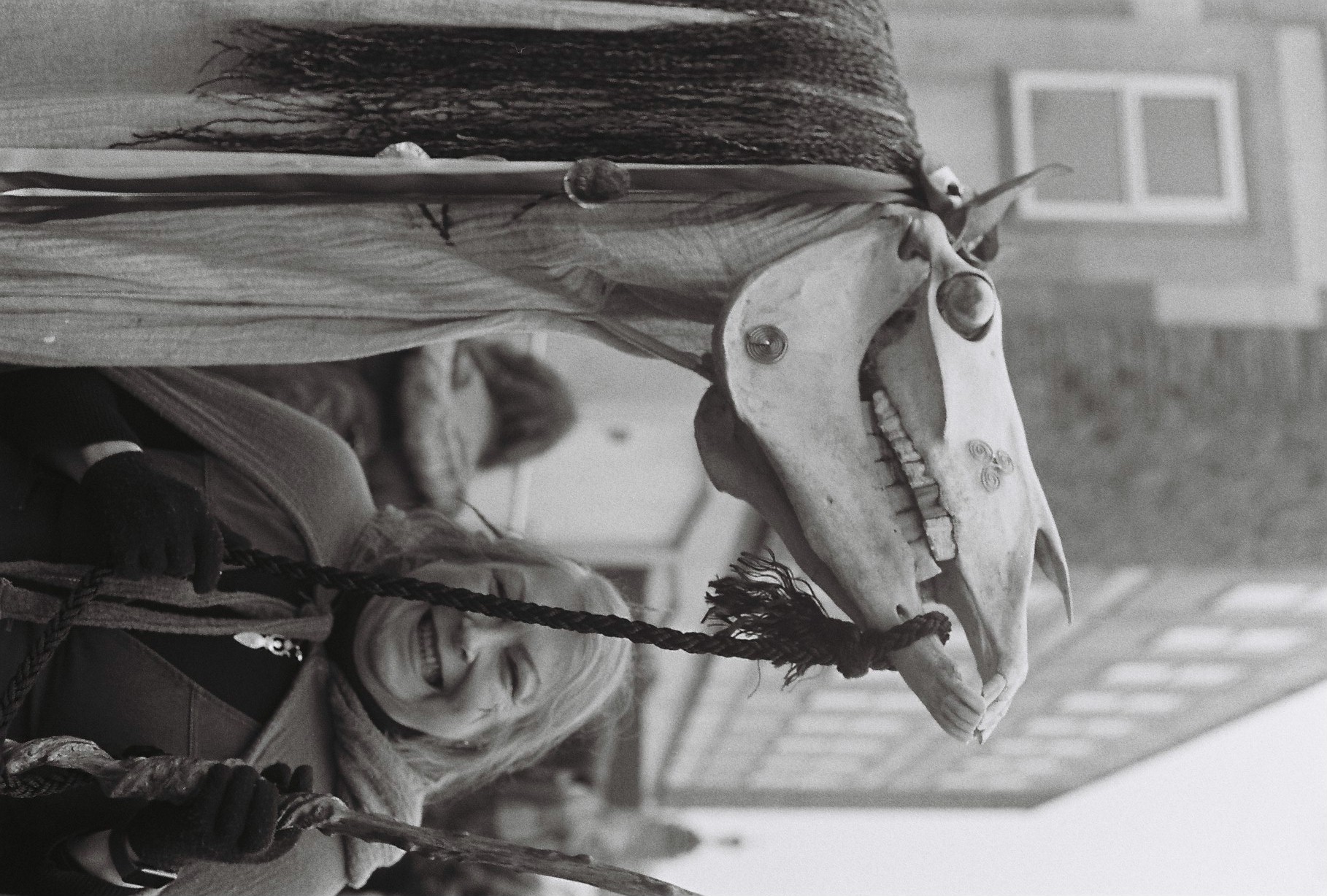
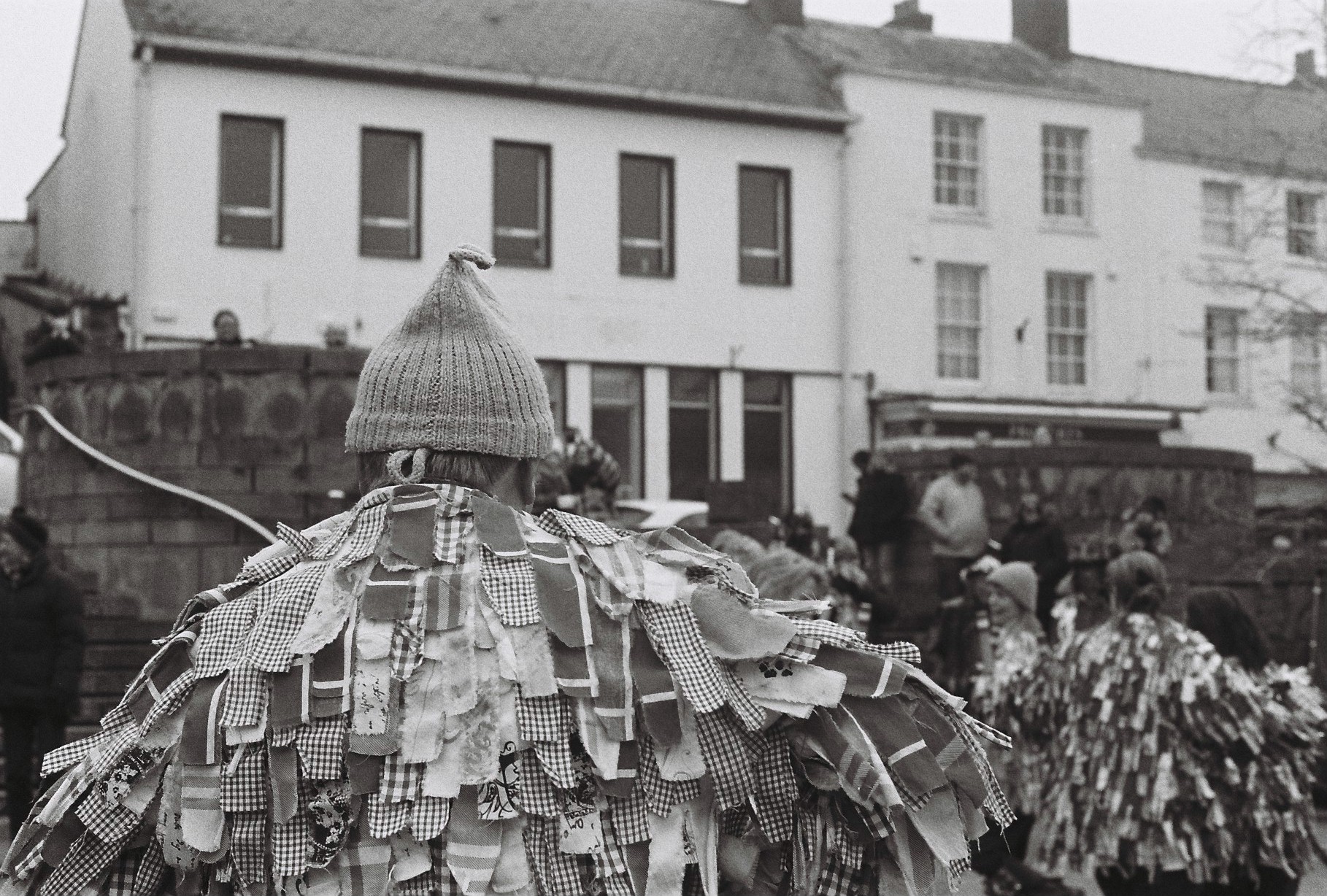
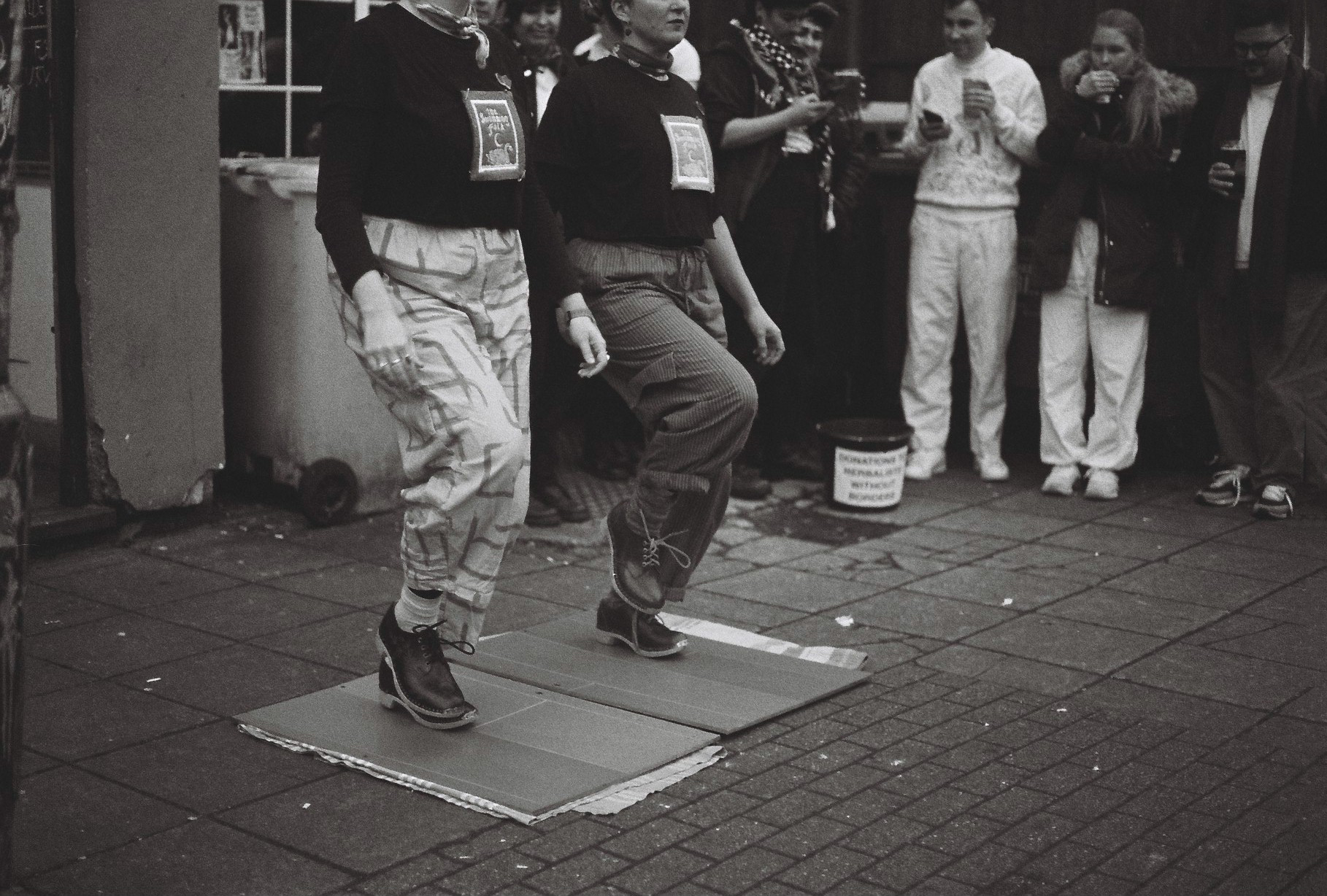
In this age of intense digital reliance, waking up to Morris dance and welcome the spring on the first of May is just one of the ways in which we reject modernity, and lean in to a feeling that has been passed down, from as far back as 1448. Under the banner of folk dancing comes styles such as Morris, Appalachian, Ceilidhs, Clog Step, Rapper Sword and Maypole. Varying incredibly in improvisation vs fixed steps, reserved costumes vs animal symbolism, danced at certain times of the year to celebrate the seasons and the age-old practices that used to mark the year, and also simply danced for joy.
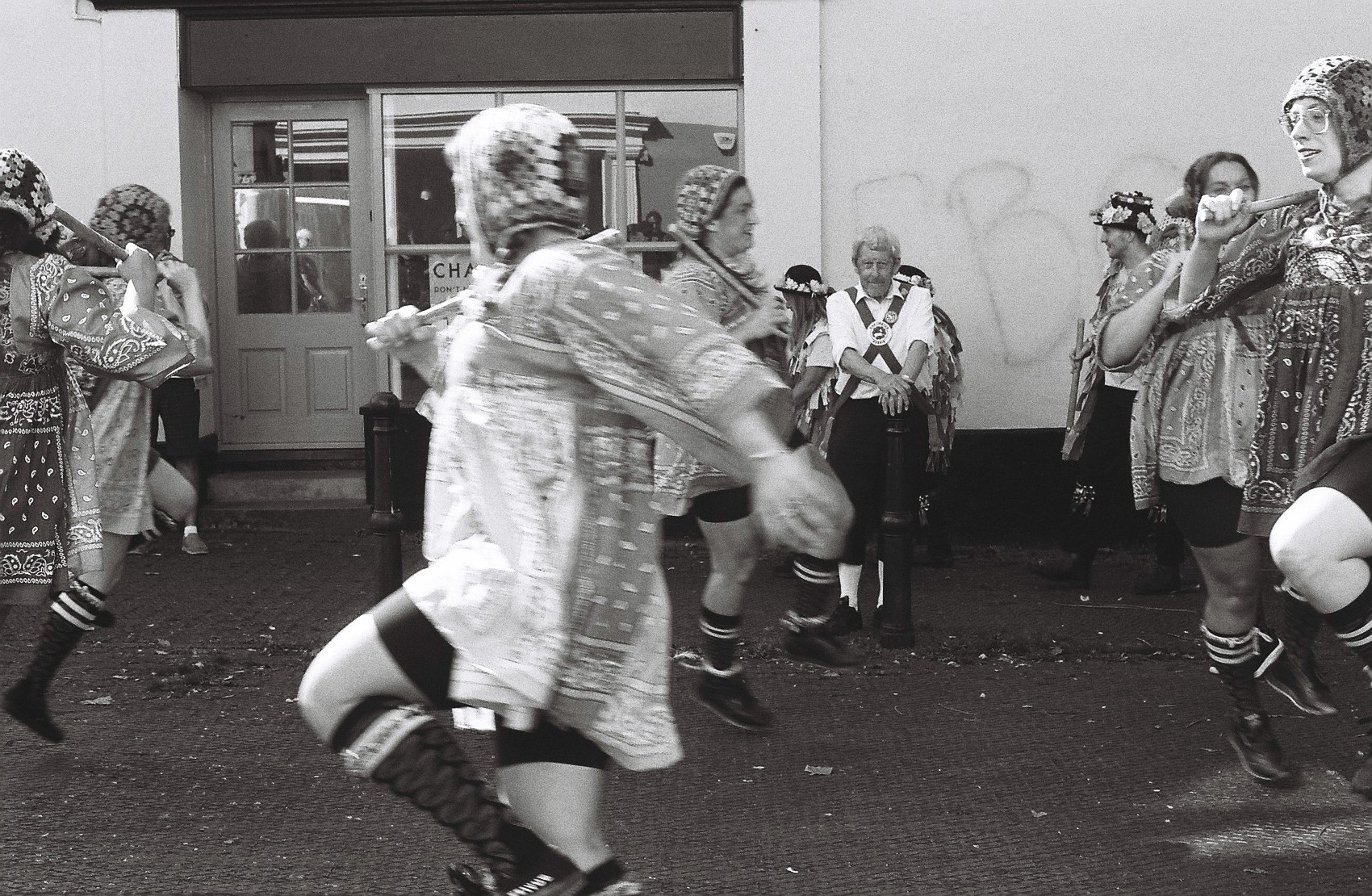
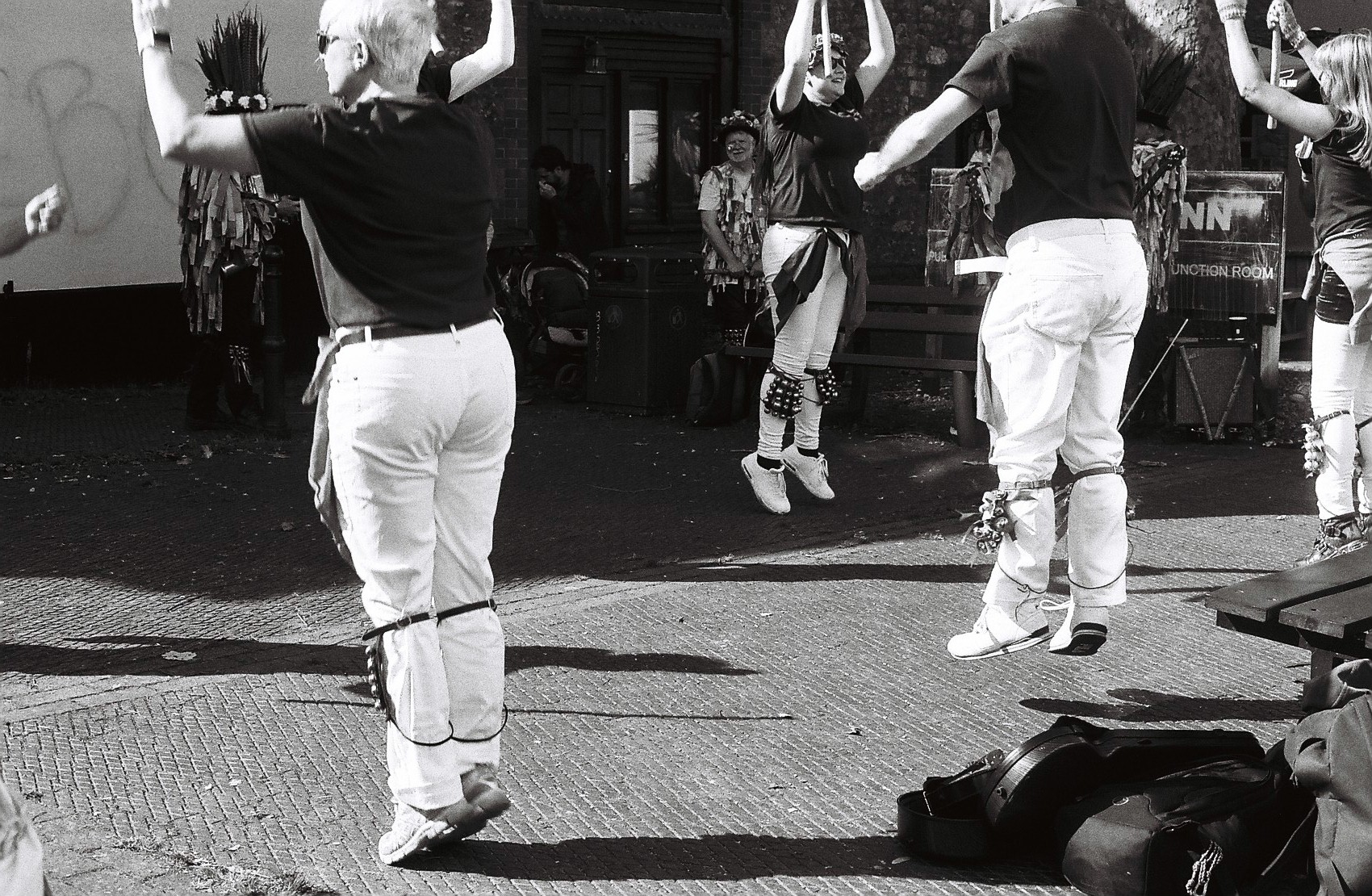
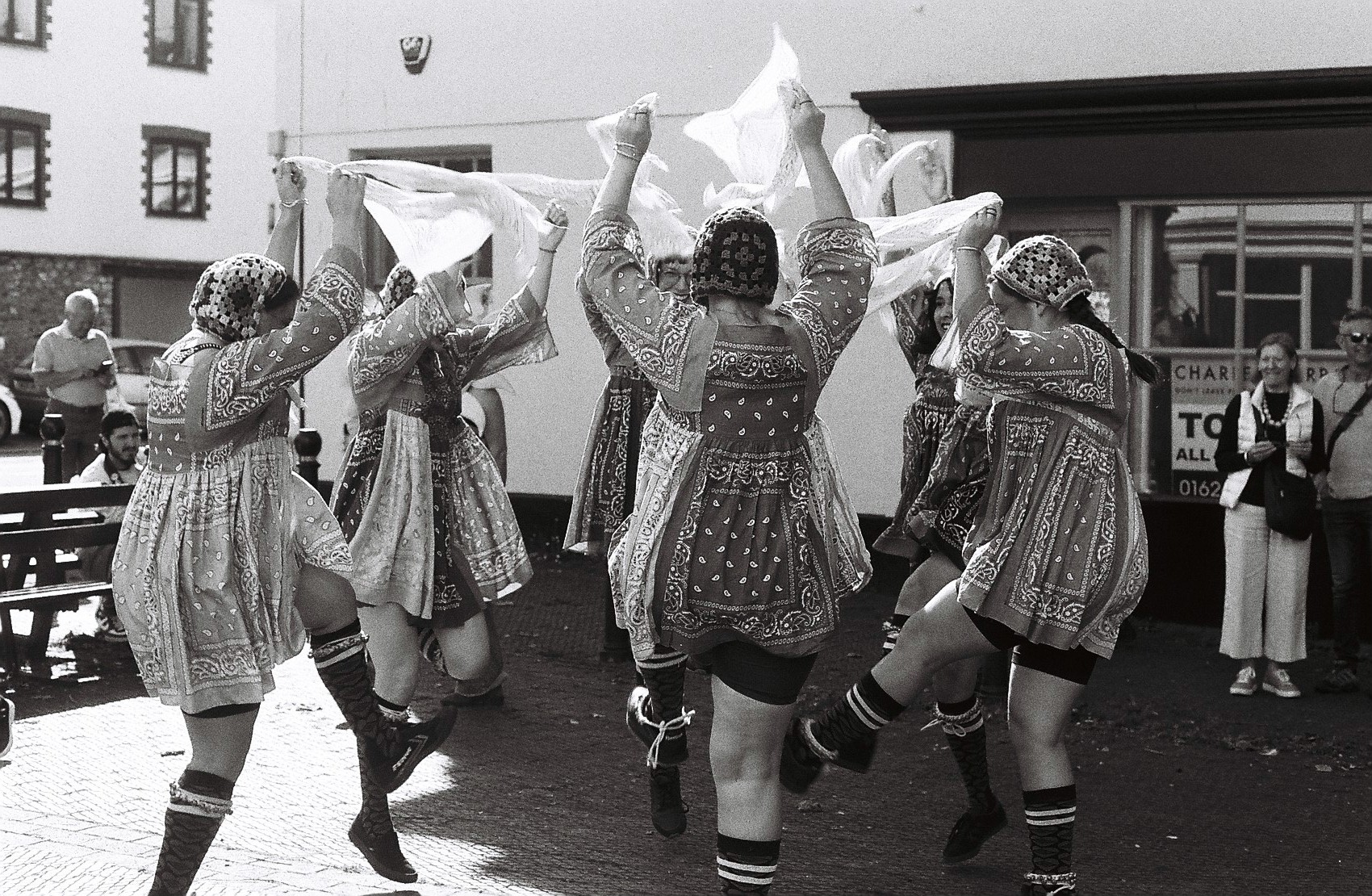
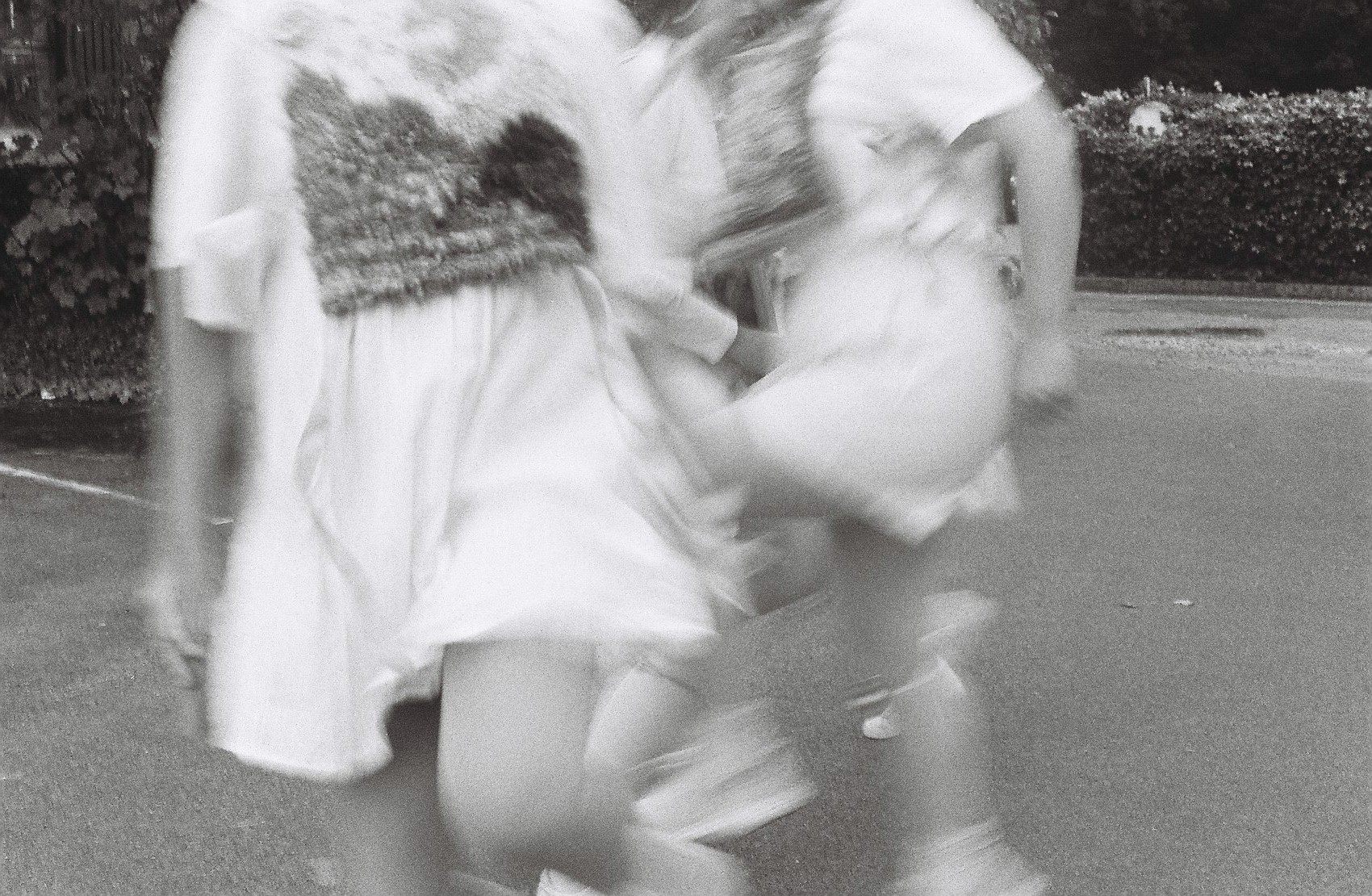
The first ‘Dawns’ series of black and white images create evocative, etheral studies of the movement of folk dancing, with limbs paused and blurred and a focus on unique moments.
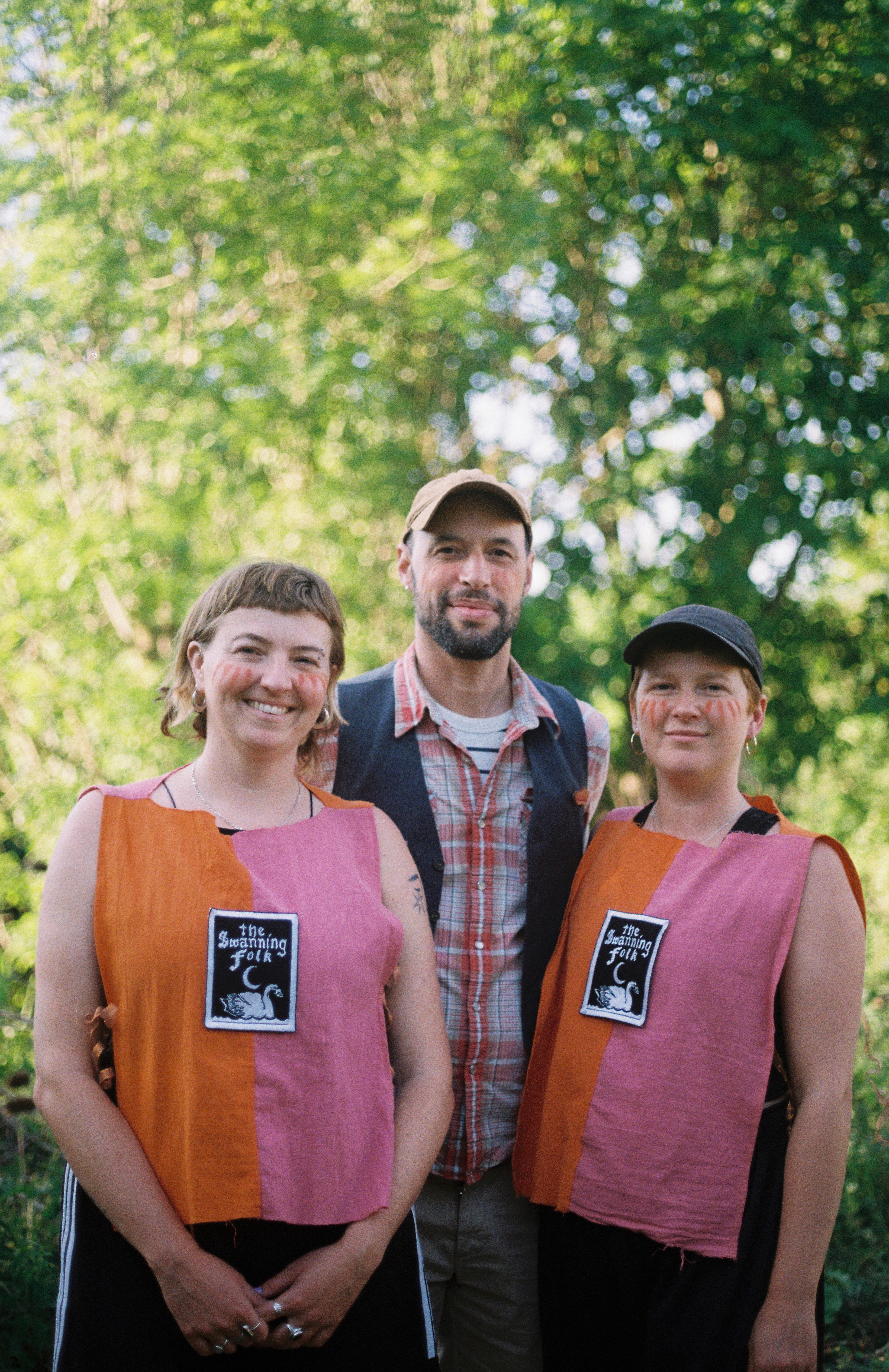
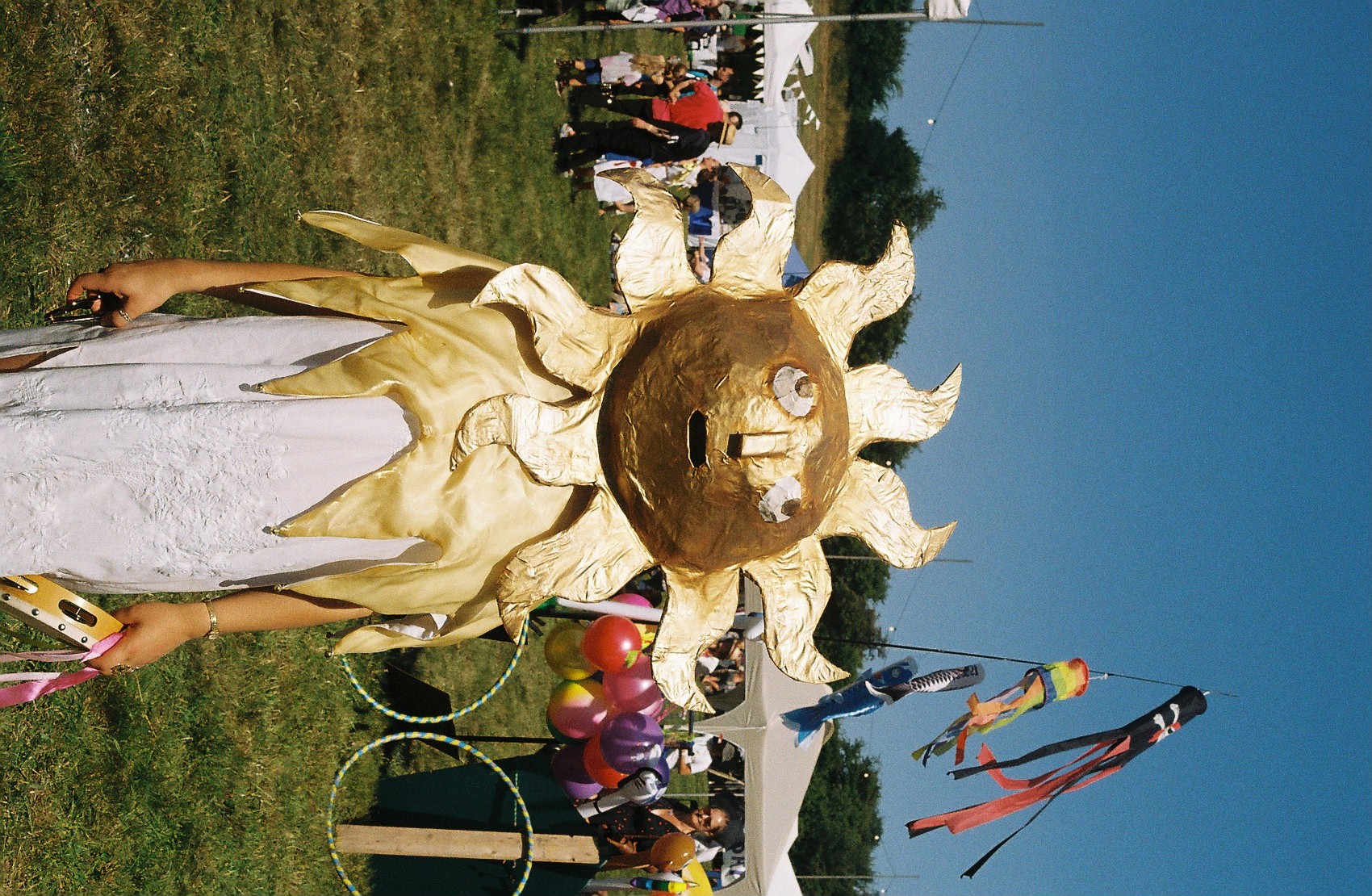
‘Dawns’ is an ongoing passion project of the last 3 years, recently envolving into colour, and portraiture.
Interview for the Floating Circle, Art Magazine from the Friends of the RWA
Bristol 24/7 This month in folk & roots feature
Evolver Magazine, Issue 141
Visual Arts South West
In this age of intense digital reliance, waking up to Morris dance and welcome the spring on the first of May is just one of the ways in which we reject modernity, and lean in to a feeling that has been passed down, from as far back as 1448. Under the banner of folk dancing comes styles such as Morris, Appalachian, Ceilidhs, Clog Step, Rapper Sword and Maypole. Varying incredibly in improvisation vs fixed steps, reserved costumes vs animal symbolism, danced at certain times of the year to celebrate the seasons and the age-old practices that used to mark the year, and also simply danced for joy.
The first ‘Dawns’ series of black and white images create evocative, etheral studies of the movement of folk dancing, with limbs paused and blurred and a focus on unique moments.
‘Dawns’ is an ongoing passion project of the last 3 years, recently envolving into colour, and portraiture.
Interview for the Floating Circle, Art Magazine from the Friends of the RWA
Bristol 24/7 This month in folk & roots feature
Evolver Magazine, Issue 141
Visual Arts South West


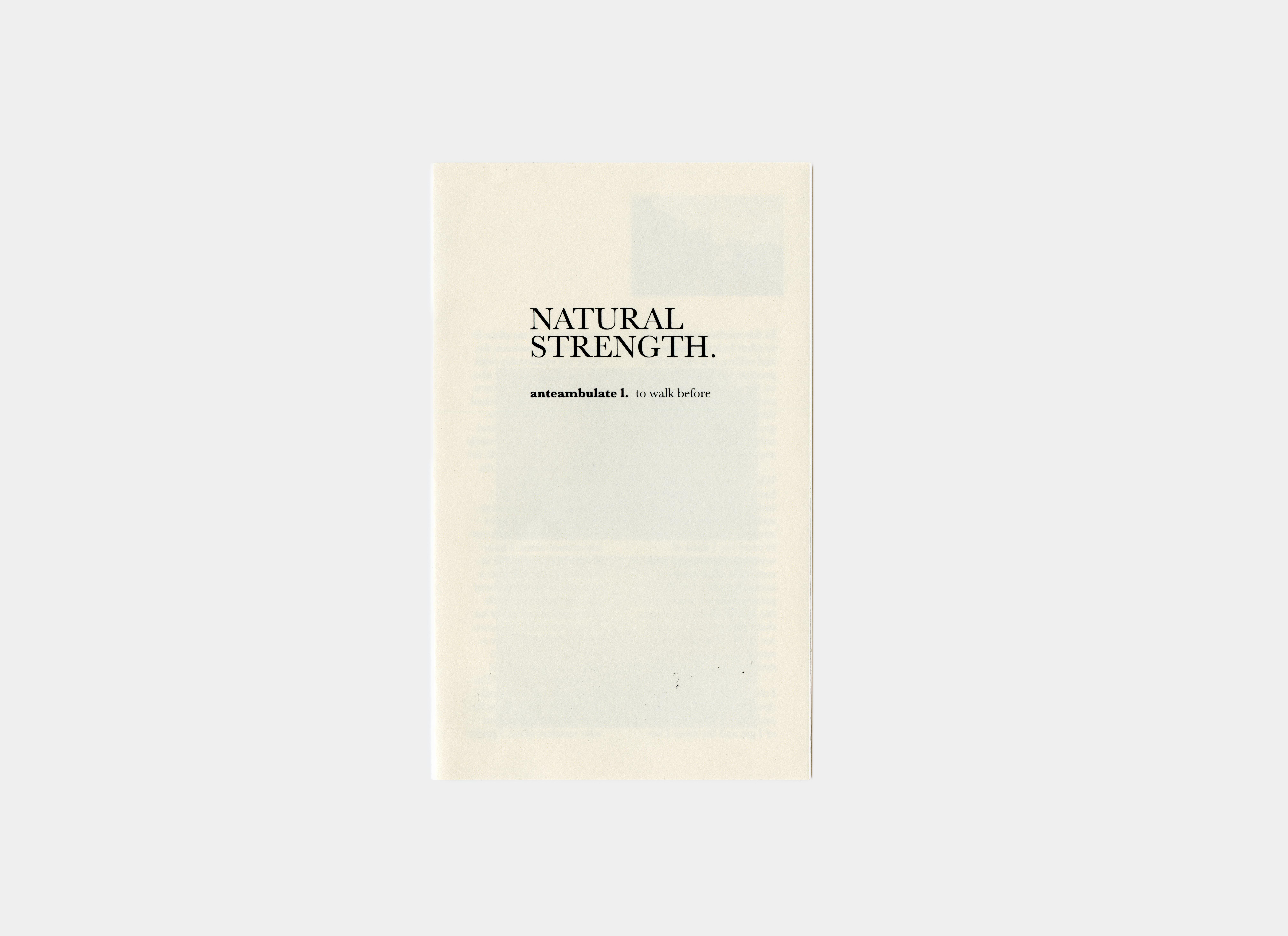
Natural Strength
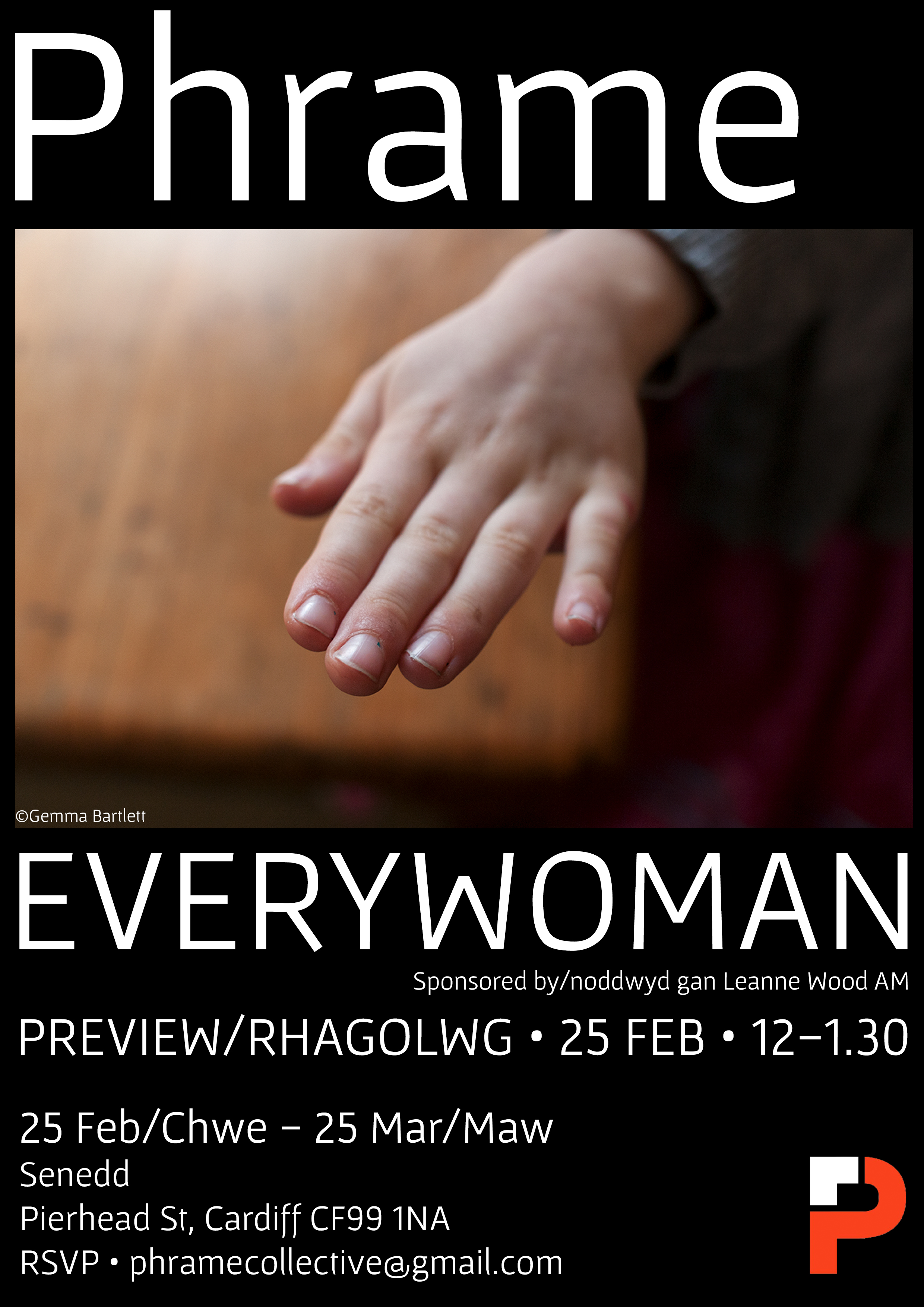
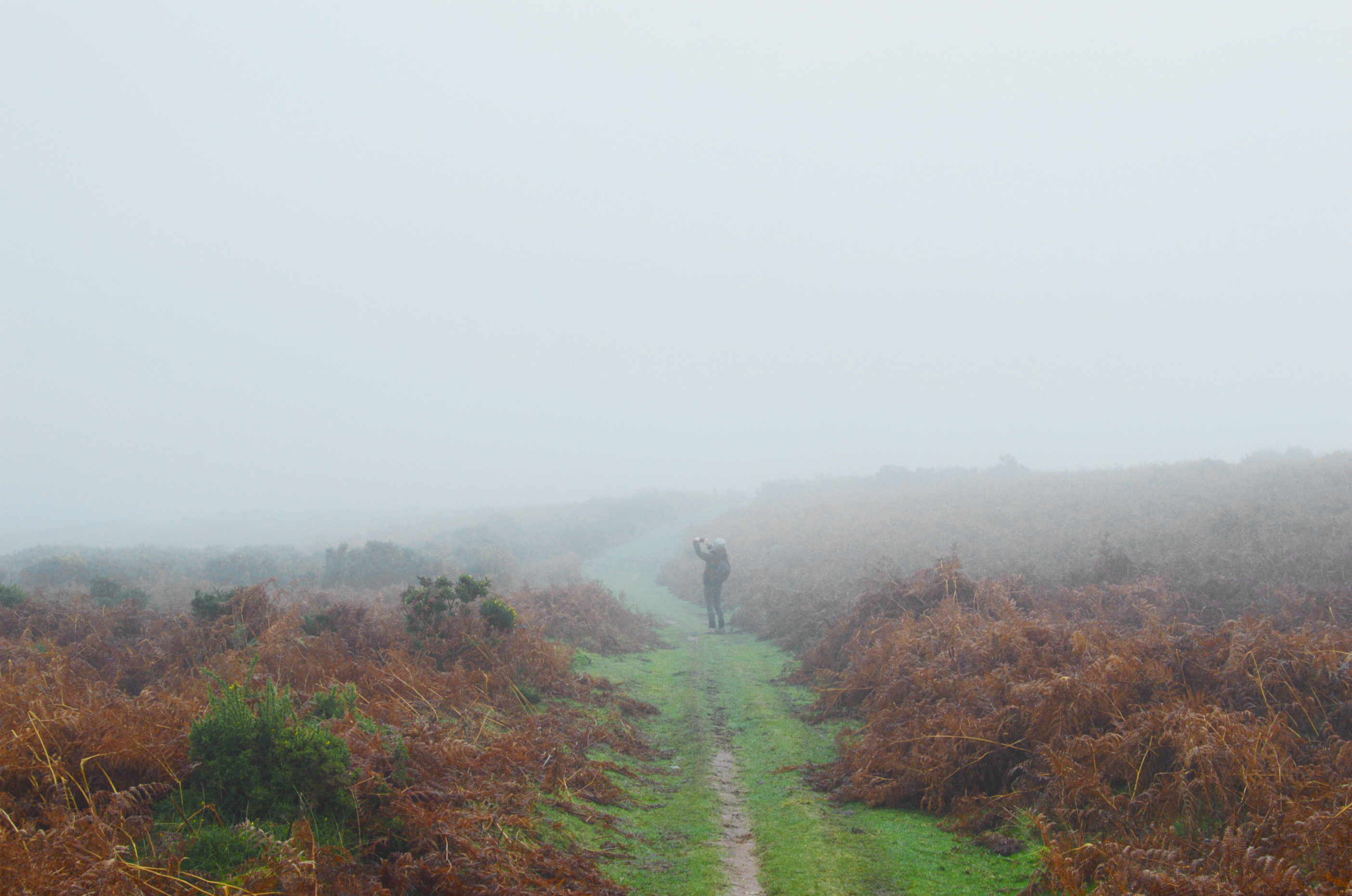
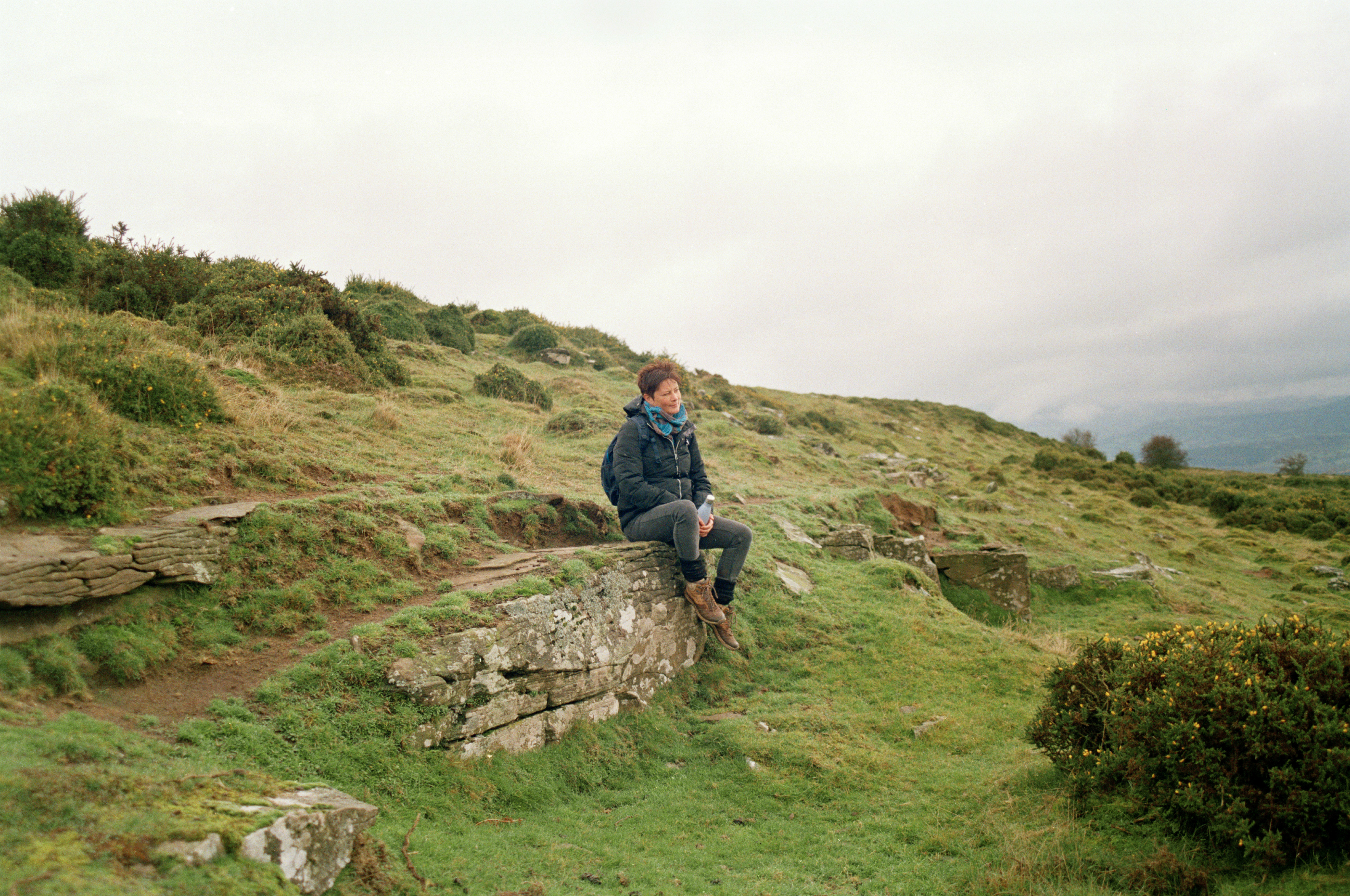
Natural Strength was created from an opportunity given to members of Phrame Wales Collective by the Senedd - National Assembly of Wales, to mark International Women’s Day 2020. The brief encouraged member to create work on the theme of ‘heroism in the everyday woman.’

In this modern world which so often feels oppressive and stifling, it is easy to feel pressured to be constantly on the go, always moving and consuming, the only thing that truly keeps me grounded, and perhaps the only thing that seems pure anymore, is nature.
When I first thought of heroism in the everyday woman, of what gives me and I know many other women strength, and the courage to carry on, I think of women’s relationships with nature, in all its modern and ancient origins. The perseverance of nature in the face of all the challenges that’s thrown at it, reminds me of the perseverance of women, now more than ever.
I owe my love of the outdoors to both my mother and father, however the older I got and the more I became aware of my place in the world as a woman, the more my relationship with nature seemed to alter also. We can’t deny that women carry a historically spiritual relationship with nature, from witches to woodland fairies and most importantly ‘Mother Nature’ herself, the nurturer, the provider, the ever-moving force.
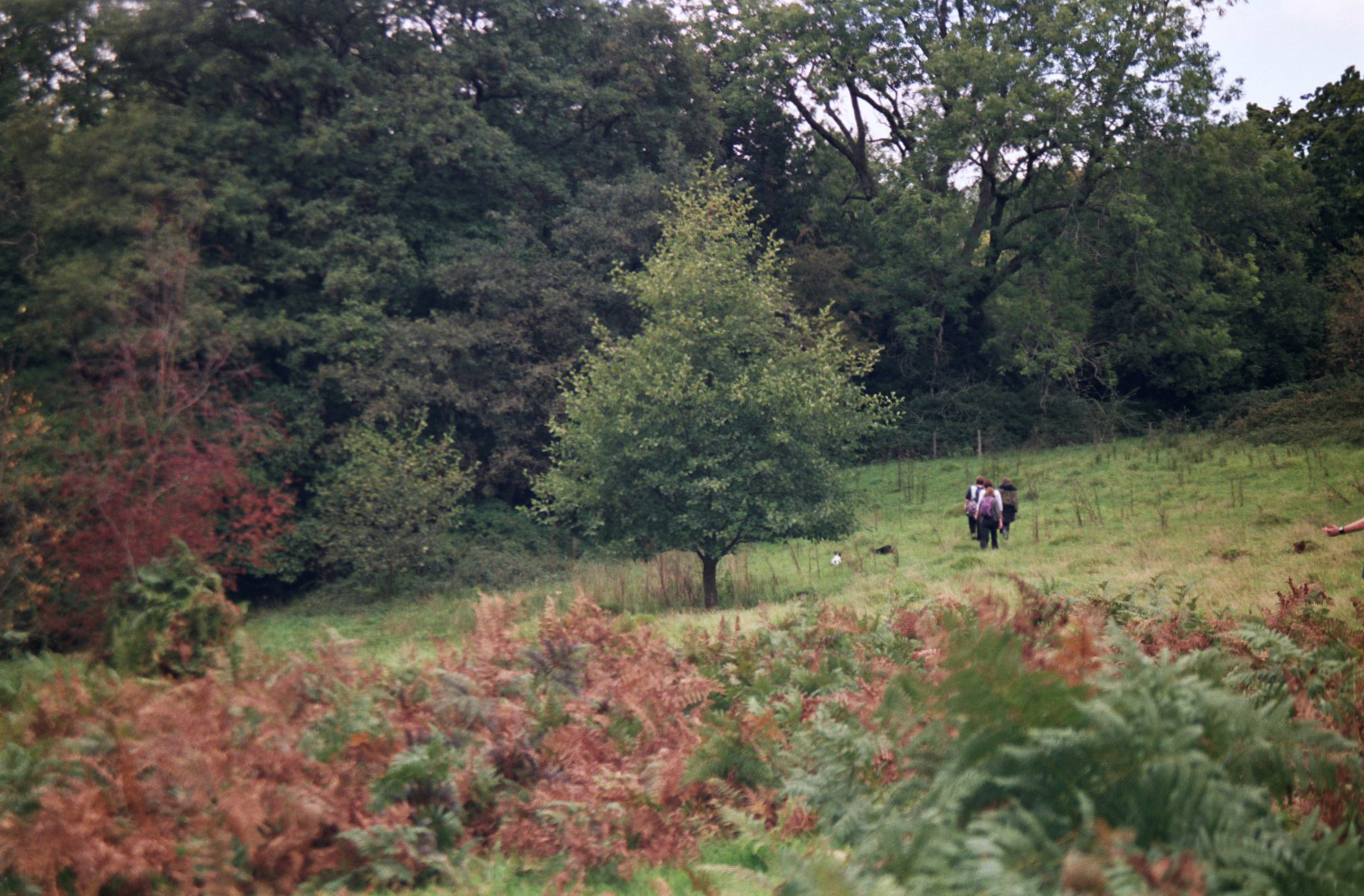


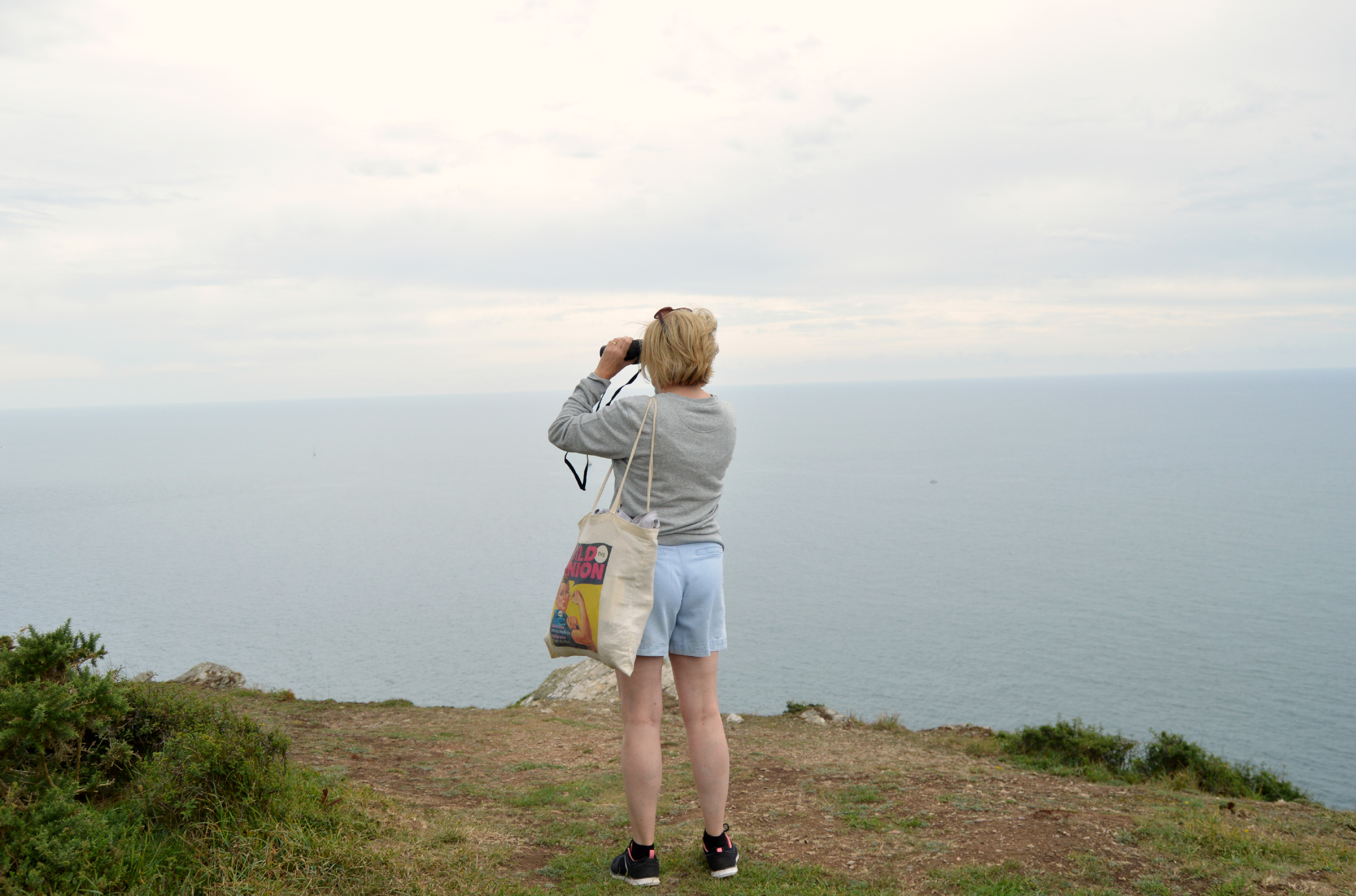


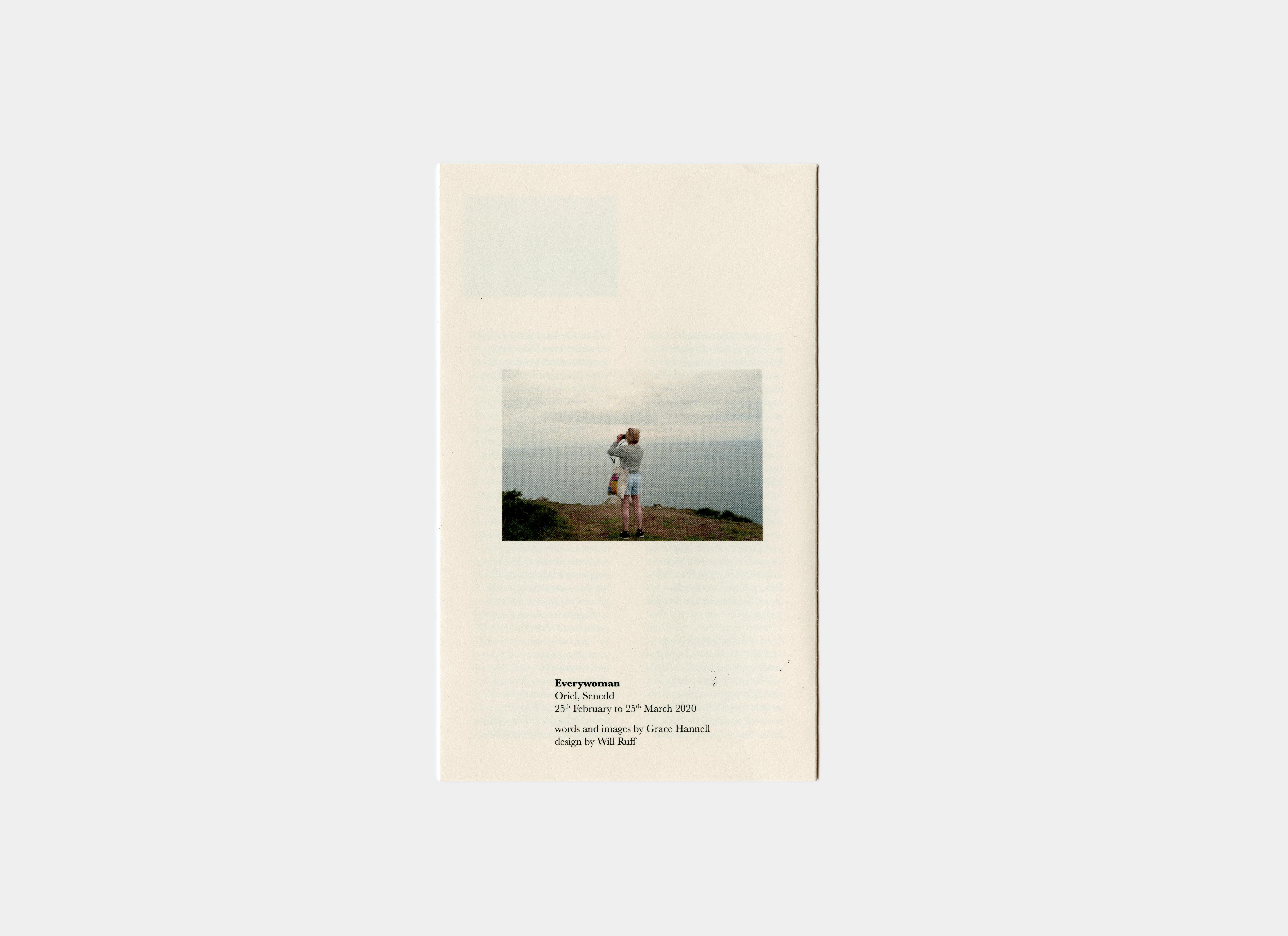

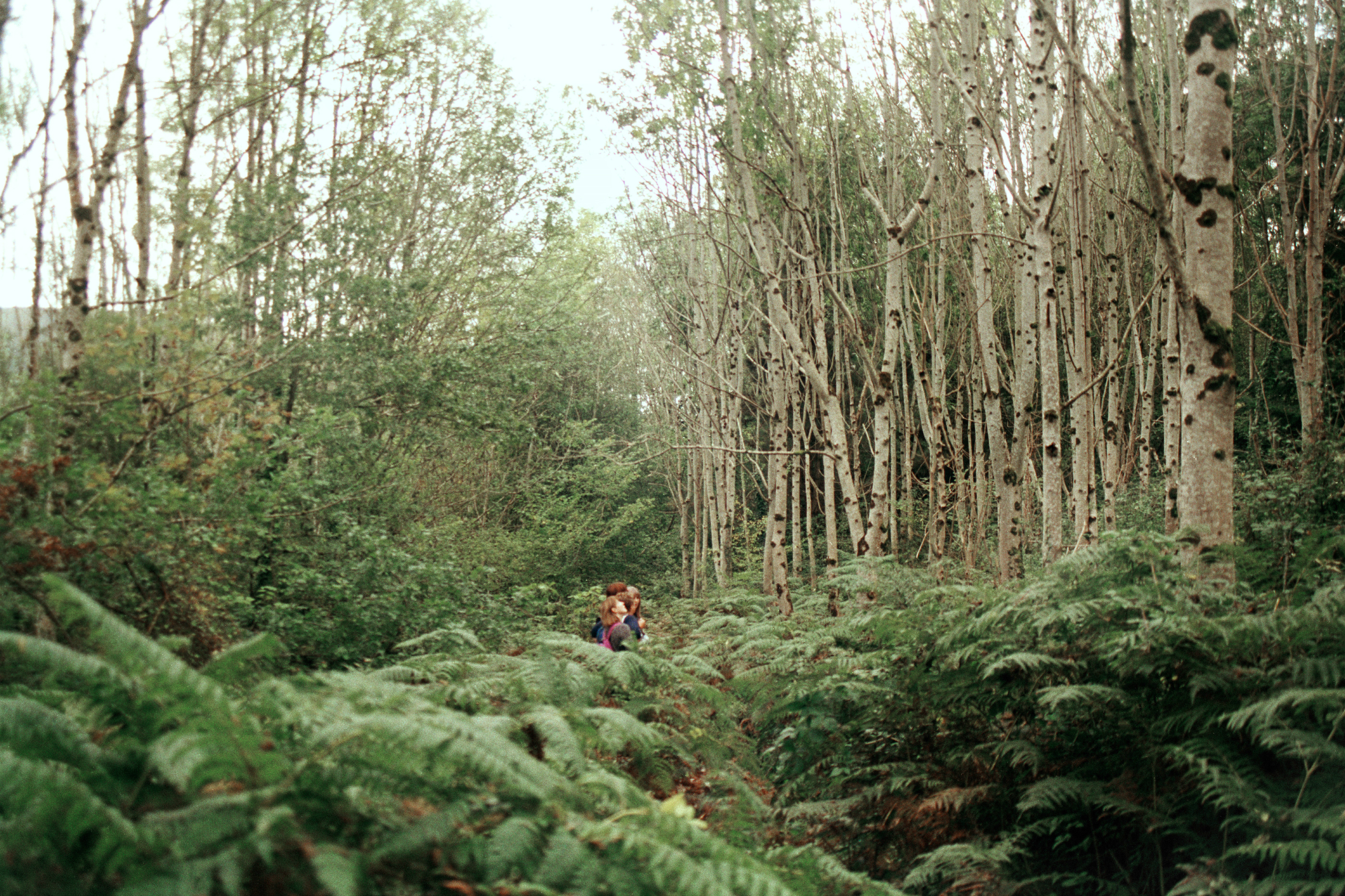
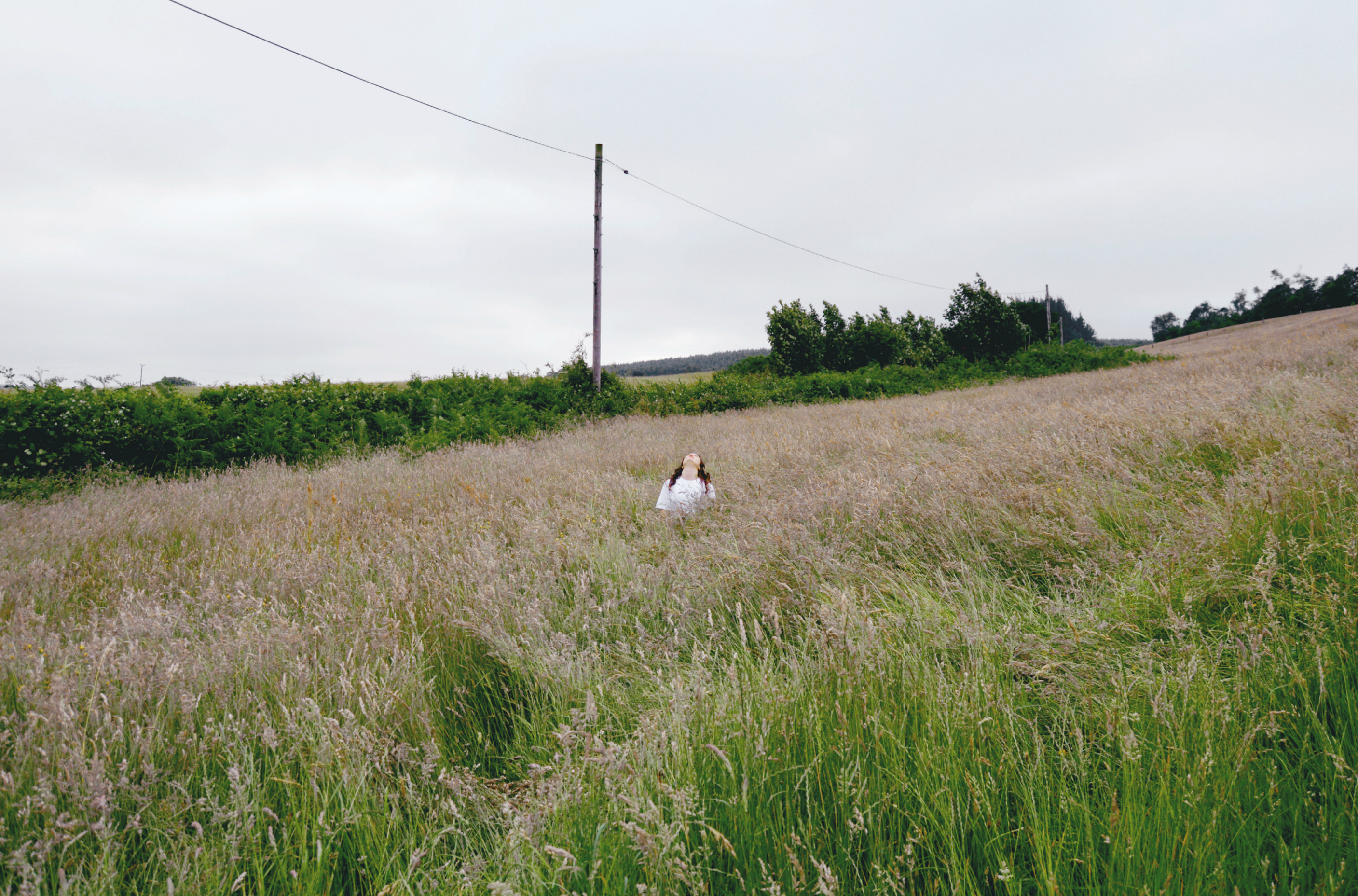
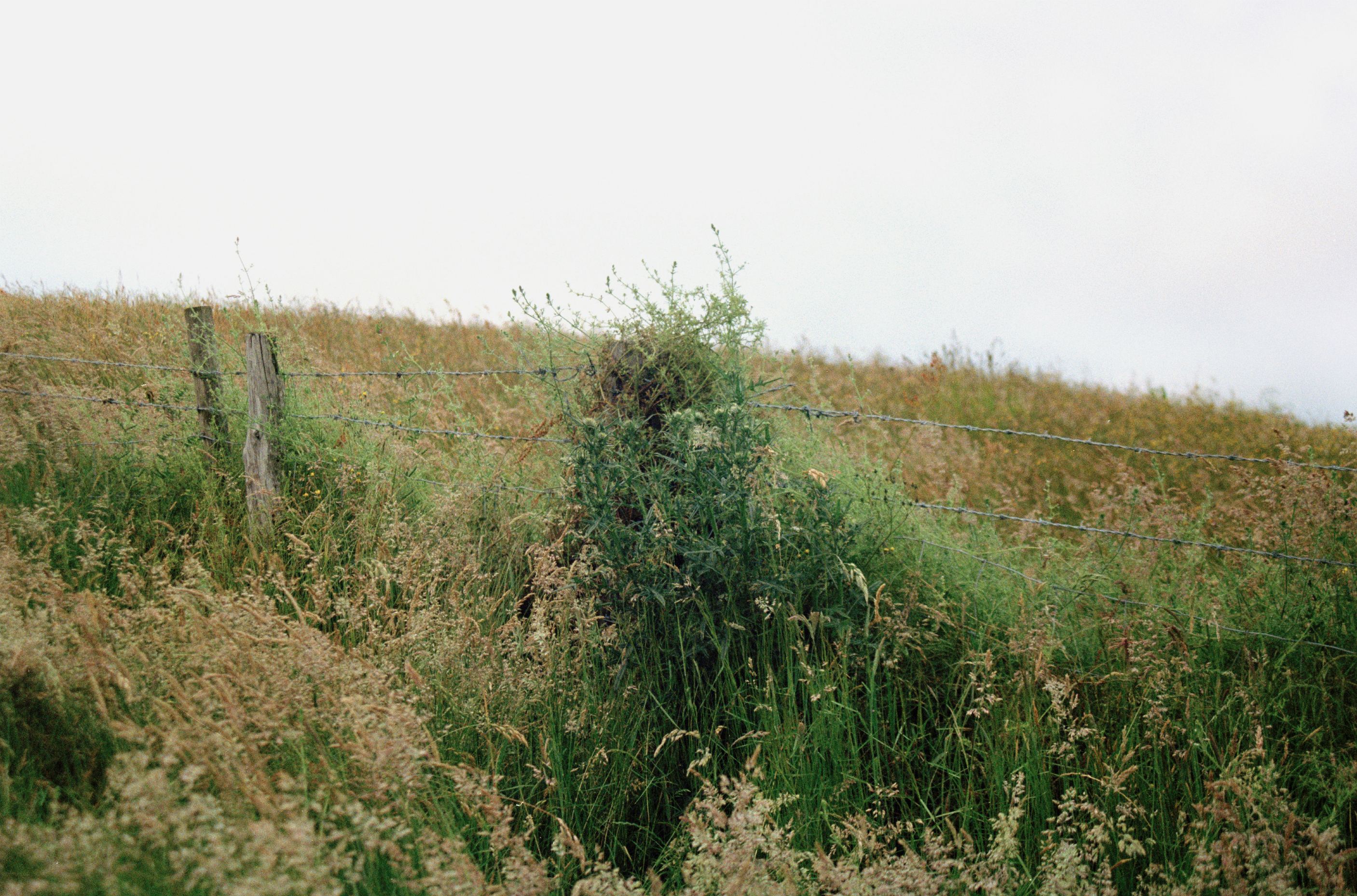
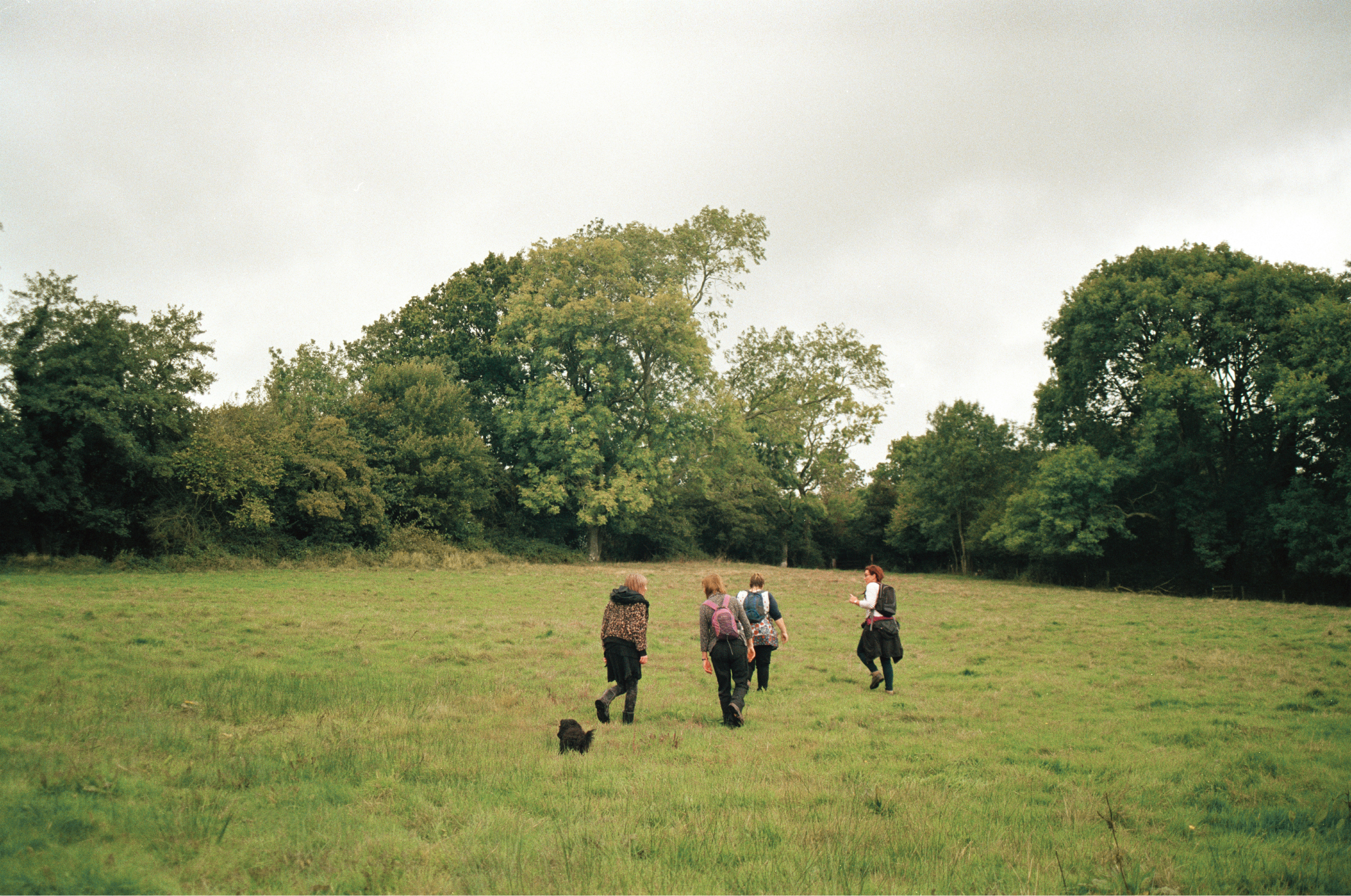
Outside, one might recognize that the natural world was here long before us and will be here long after us, and it feels personal, and so far removed for every modern problem we face. I know that so many women before me have gone to the natural places I love and seen the same sunsets, the same Springs and starlings and have felt at peace. I wanted to convey some of that feeling through photography and make women think “I’ve felt that. It took courage for me to take that time for myself.”
On a smaller scale, nature has a way of nurturing women through our own gardens also, to grow flowers and vegetables, to cultivate, and feel like you can make something beautiful happen, something useful grow. Women are so capable of making things blossom, from children to friendships, relationships and ourselves.

Like myself, many of the women I have spoken to whilst walking through the beautiful Welsh countryside are very unsure of the future of Wales, and their place within it.
The wonderful women featured in my work are mental health practitioners, artists, leaders, teachers and so much more, and one thing we can all agree on is that an immersion in nature is beyond doubt beneficial to all-round well-being. Simply walking, encourages others to talk and open up in a more relaxed, nurturing environment, and leaves us feeling more grounded and often secure. Walking together with others builds a precious sense of community, which heals both mentally and physically.

Beth Nawr ?
2o18
2o18


“ If places are indeed a fundamental aspect of man’s existence in the world, if they are sources of security and identity for individuals and for groups of people, then it is important that the means of experiencing, creating and maintaining significant places ar not lost”
- Edward Relph
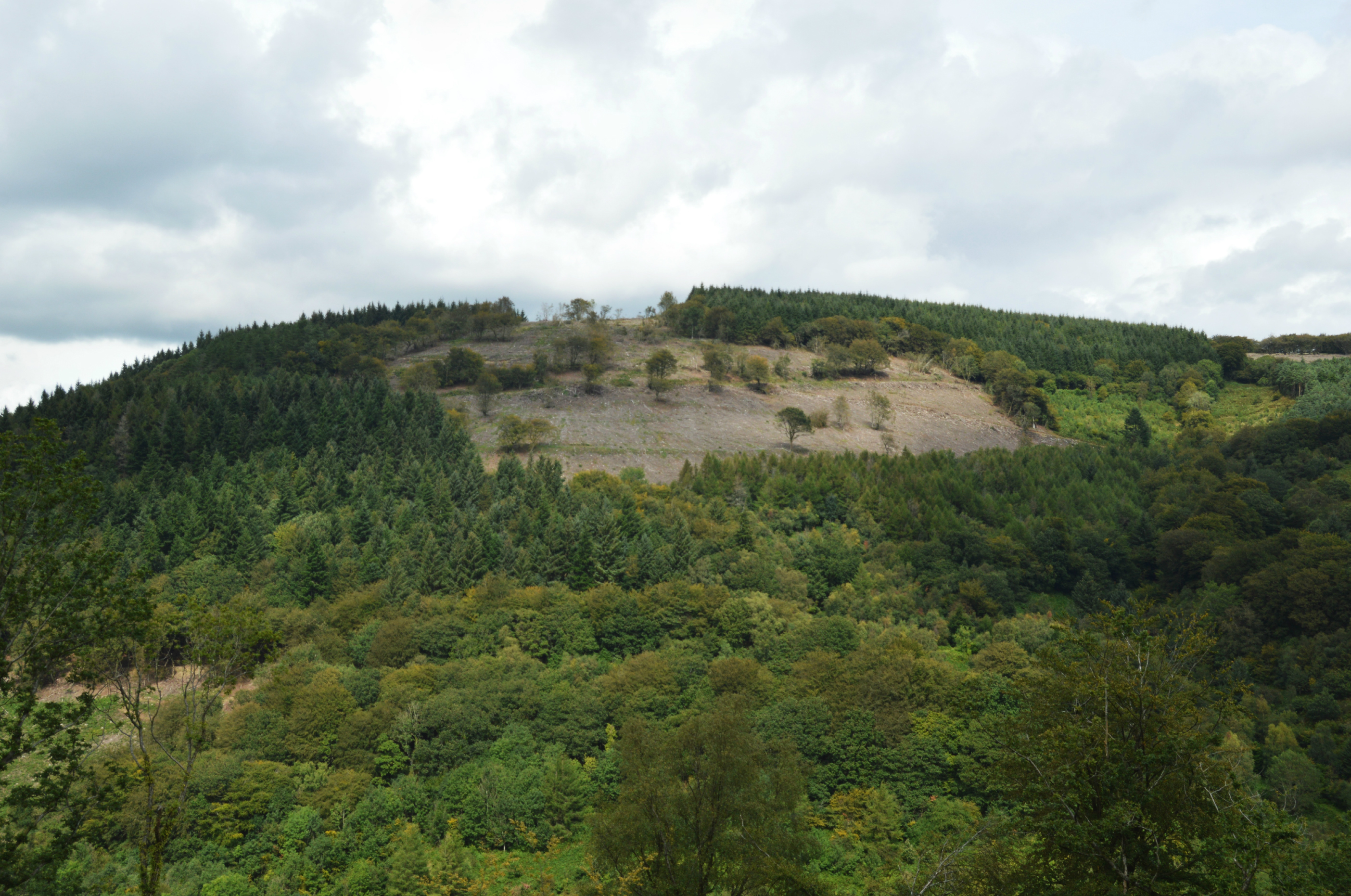
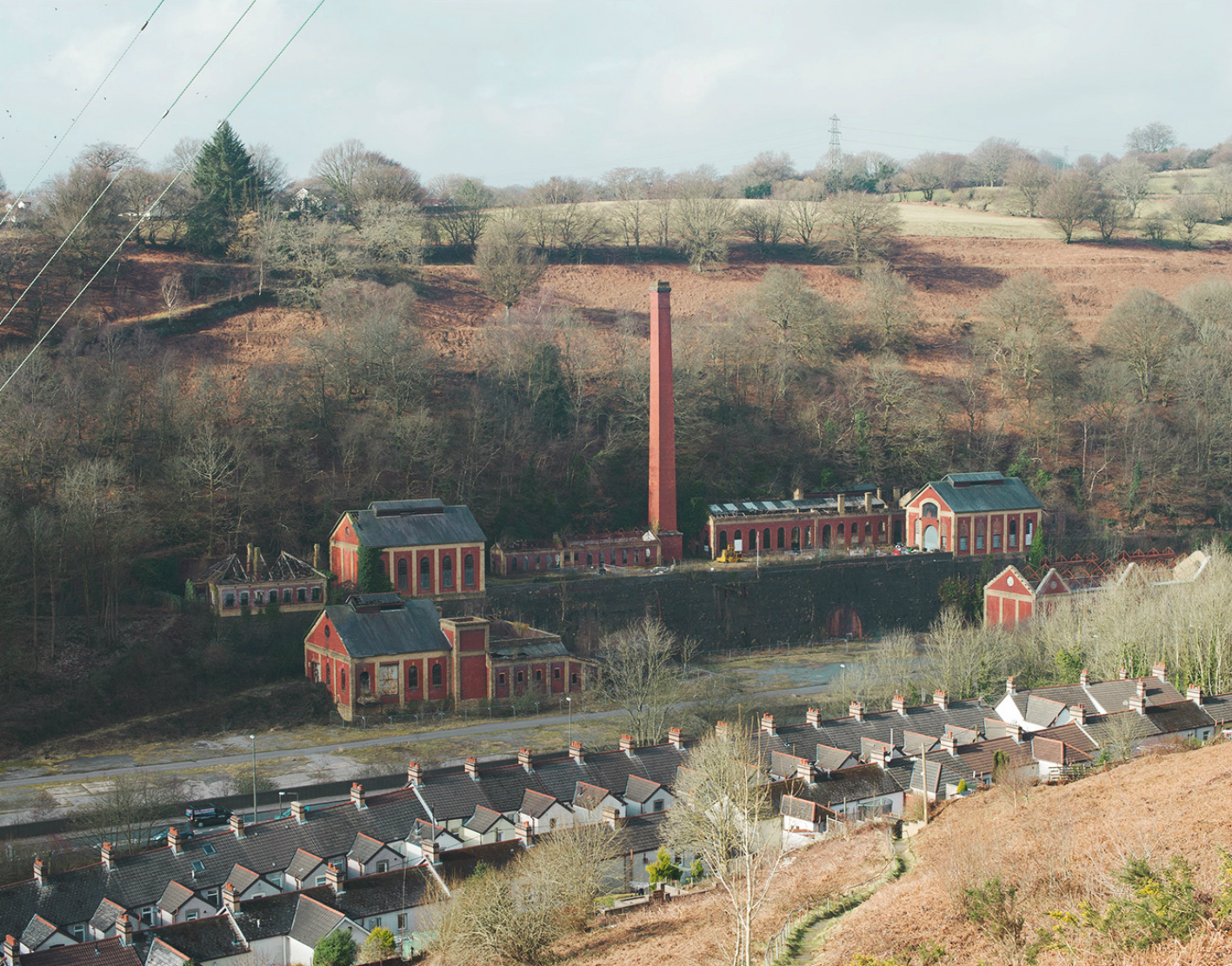
South Wales in an area in limbo. The sudden and continuous disappearance of industry that lives were orginally built around has left the land in distress and its people without pride. South Wales is now left in an uncertain state, teetering between salvation by conservation and adaptation, and potential destruction, by lost hope and insensitive development.
South Wales in an area in limbo. The sudden and continuous disappearance of industry that lives were orginally built around has left the land in distress and its people without pride. South Wales is now left in an uncertain state, teetering between salvation by conservation and adaptation, and potential destruction, by lost hope and insensitive development.
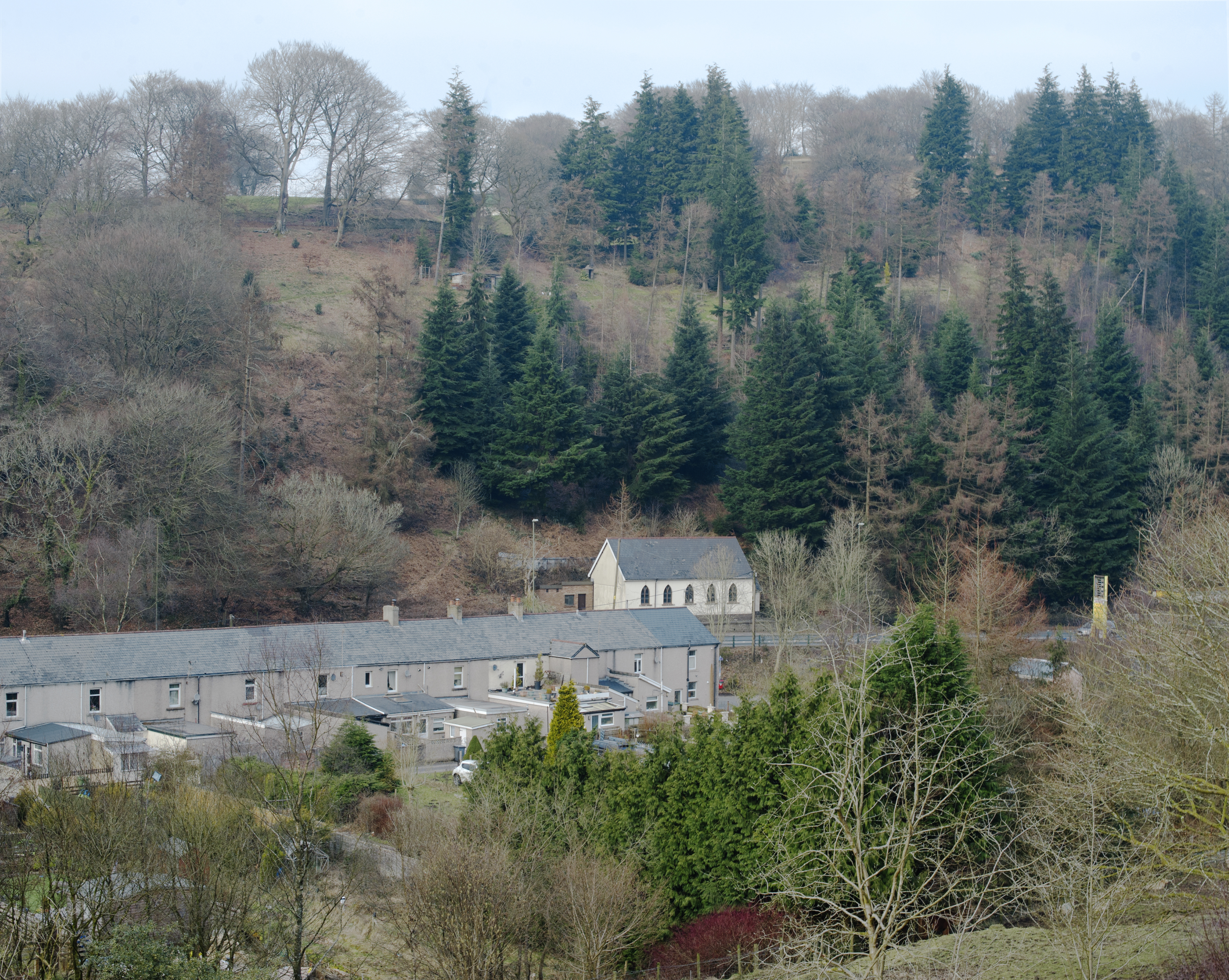

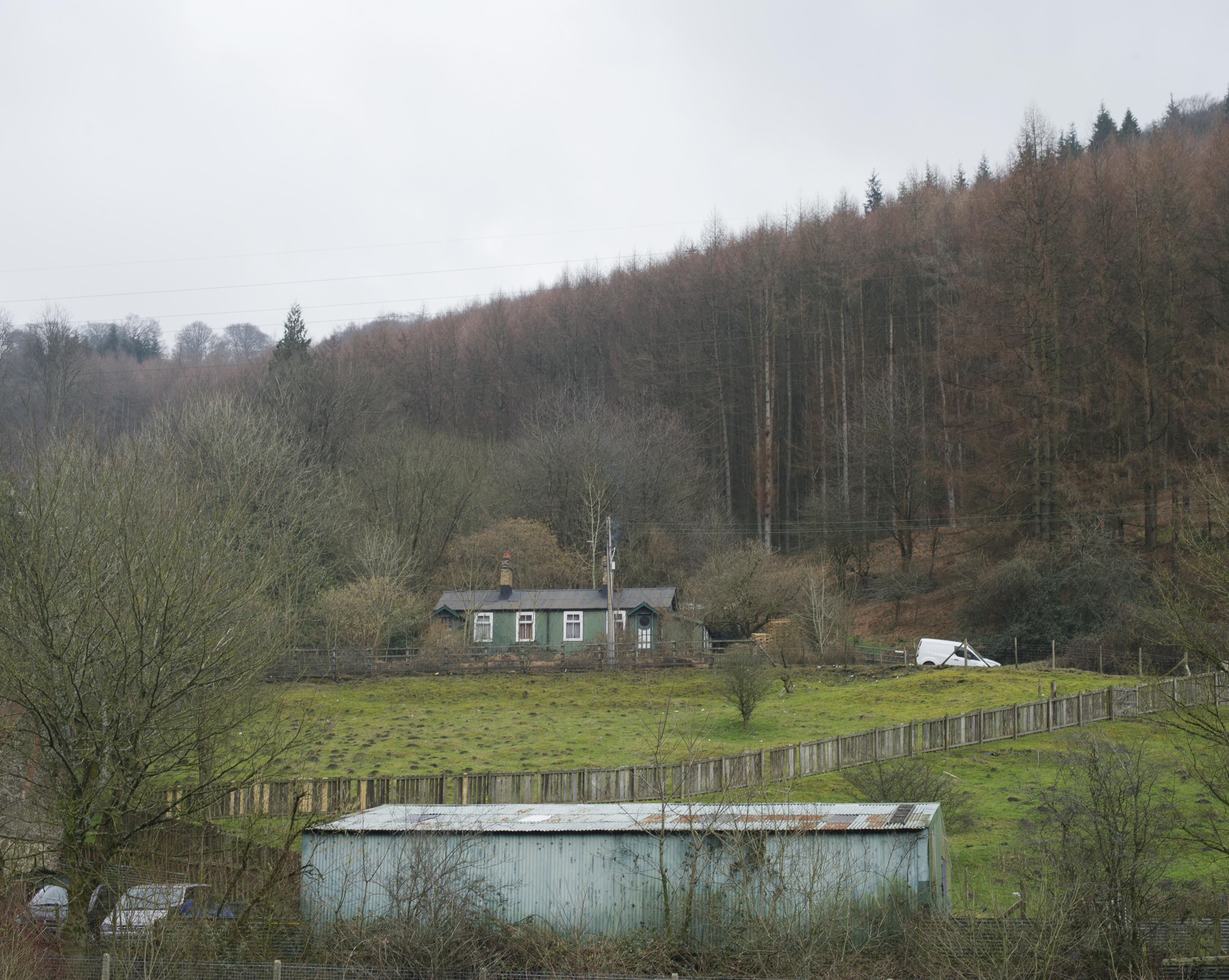
These images of a post-industrial landscape hint at this potential rise or fall, and aims to encourage conversation between two sides. Some suggest that the natural beauty of South Wales never benefited from industry. Traditional industrial work such as coal mining and steelwork was detrimental to workers and was attributed to generations of ill-health and unnecessary tragedy, scarring the land into black hills and dirty rivers. On the other hand, what is the landscape of South Wales without its industry that was so incredibly important to the development of Britain, and which brought constant work and strong communities to its people?
I have always lived in the shadow of memorialisation, The land and its people seem to be in a constant state of mourning- for the loss of industry and the often fulfilling way of life that it brought, as well as the danger and deaths it caused, and for diminishing traditions as well as language. Sites of industry are now housing developments, memorials, or house the remains of once revered buildings. Growing up in this land, these images are shaped by my own fears and optimism as well as those that resonate throughout South Wales.




Every Leaf Has Its Autumn
2017
2017
Every Leaf Has Its Autumn is
a
personal reaction to Ford Cemetery during late Spring of 2017.
Ford Cemetery in a 34 acre working cemetery in the heart of Plymouth. It is an
important site within the city for thriving wildlife and a fascinating
spiritual and site abundant with symbolism and history as well as a respectful
untroubled site for the departed.
This series documents the changes sunlight has brought to the cemetery. Sunlight is the beginning of everything- it creates life, it allows life to continue, it is both nourishing and healing. The beauty of the graveyard in the sunlight and the abundance of wildlife that thrives here lightens grief, and creates a place of peace and rest amongst the often-overwhelming reality of loss. The three vital components of these images are nature, death, and the literal human subject; from light comes life, from the grave comes nature, and light allows everything to continue this way.
This series documents the changes sunlight has brought to the cemetery. Sunlight is the beginning of everything- it creates life, it allows life to continue, it is both nourishing and healing. The beauty of the graveyard in the sunlight and the abundance of wildlife that thrives here lightens grief, and creates a place of peace and rest amongst the often-overwhelming reality of loss. The three vital components of these images are nature, death, and the literal human subject; from light comes life, from the grave comes nature, and light allows everything to continue this way.


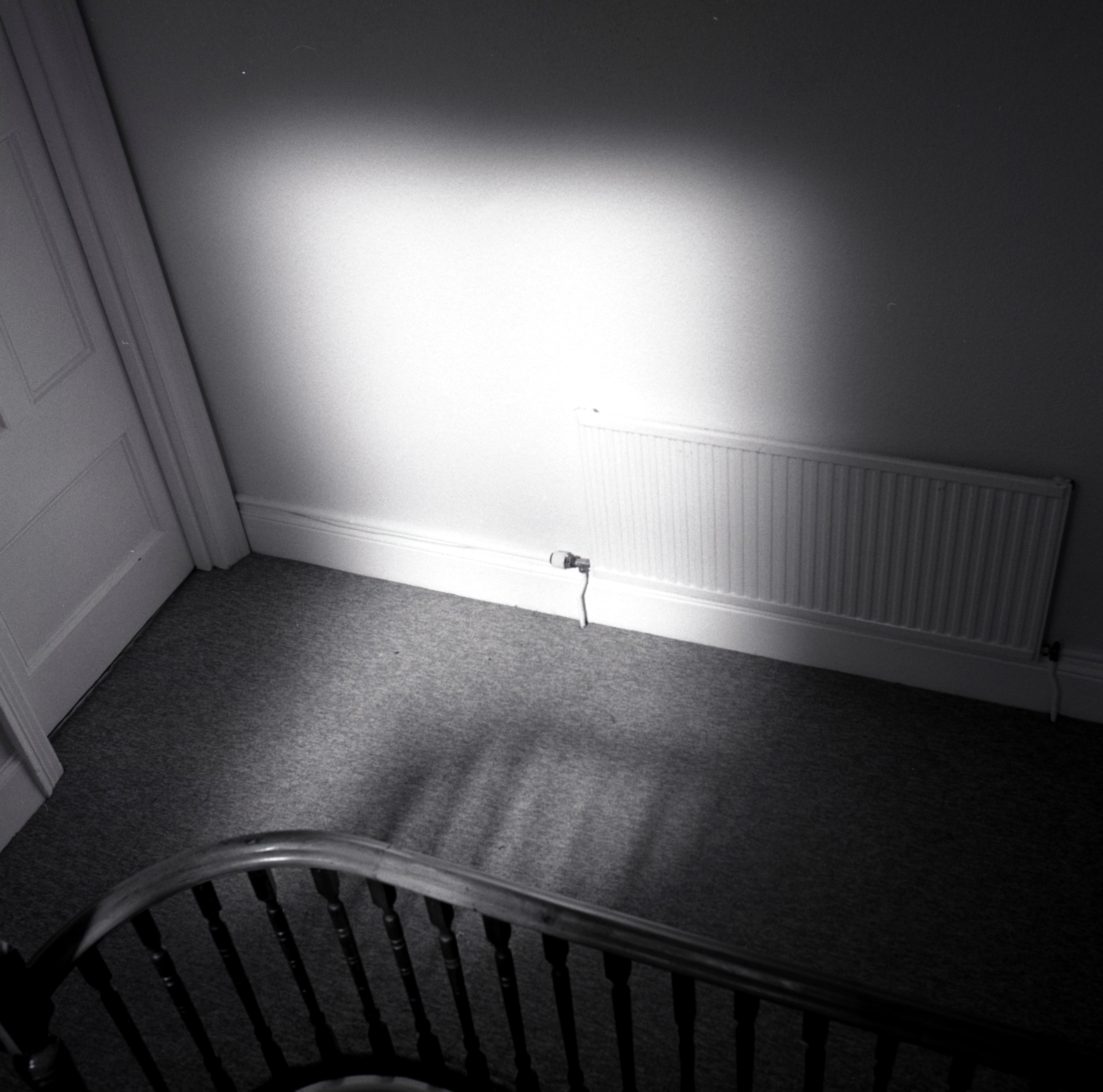
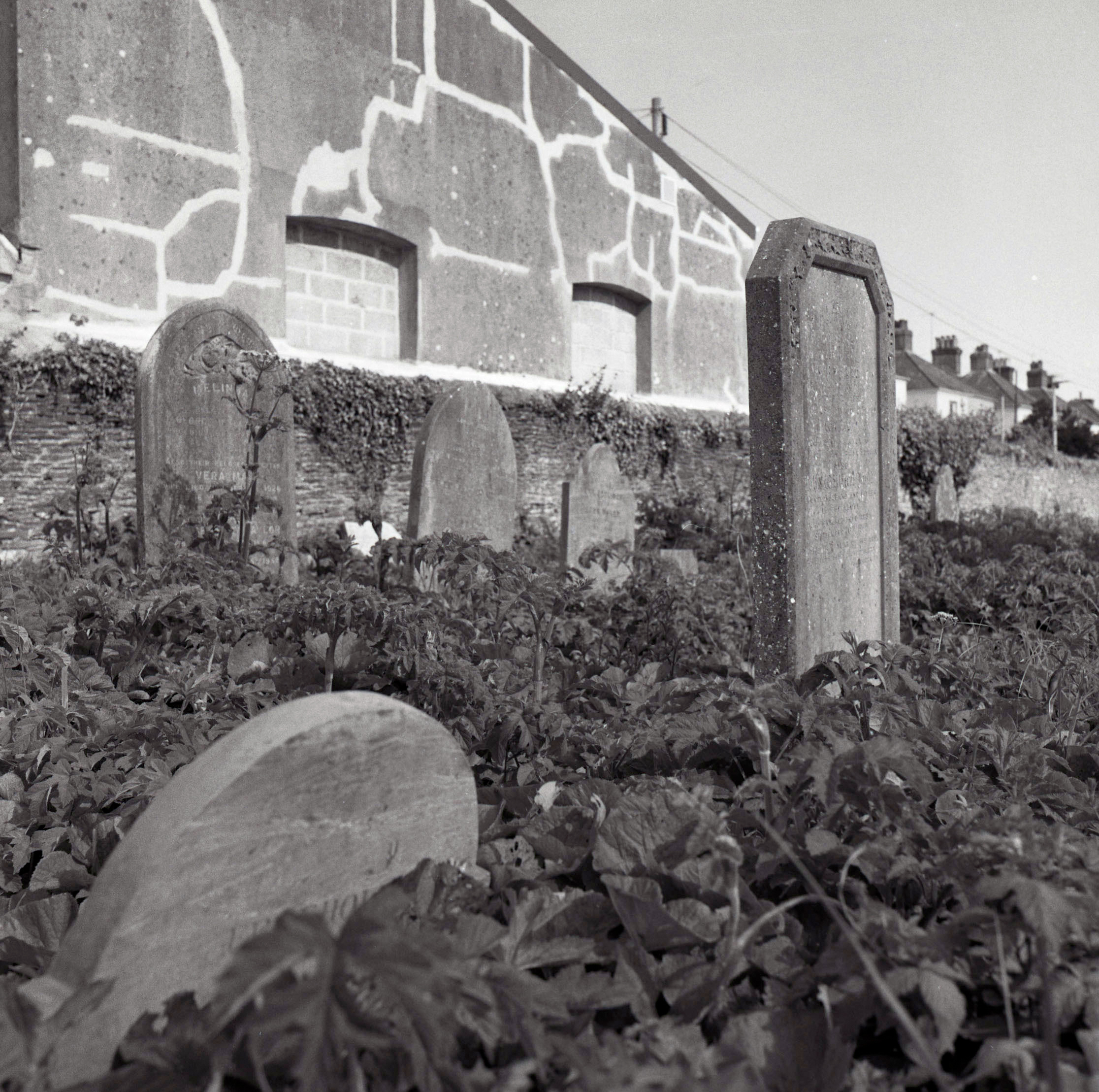
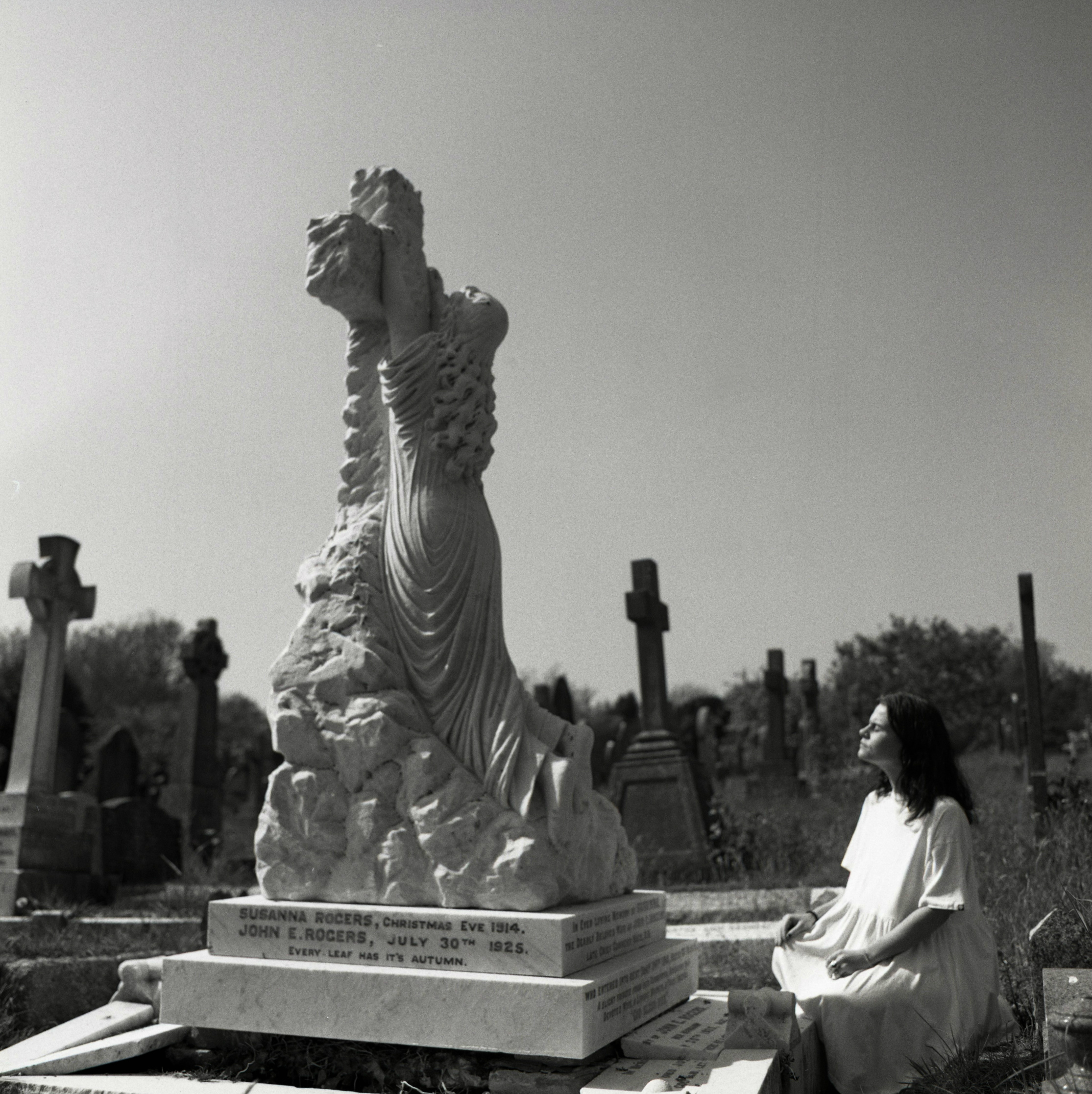
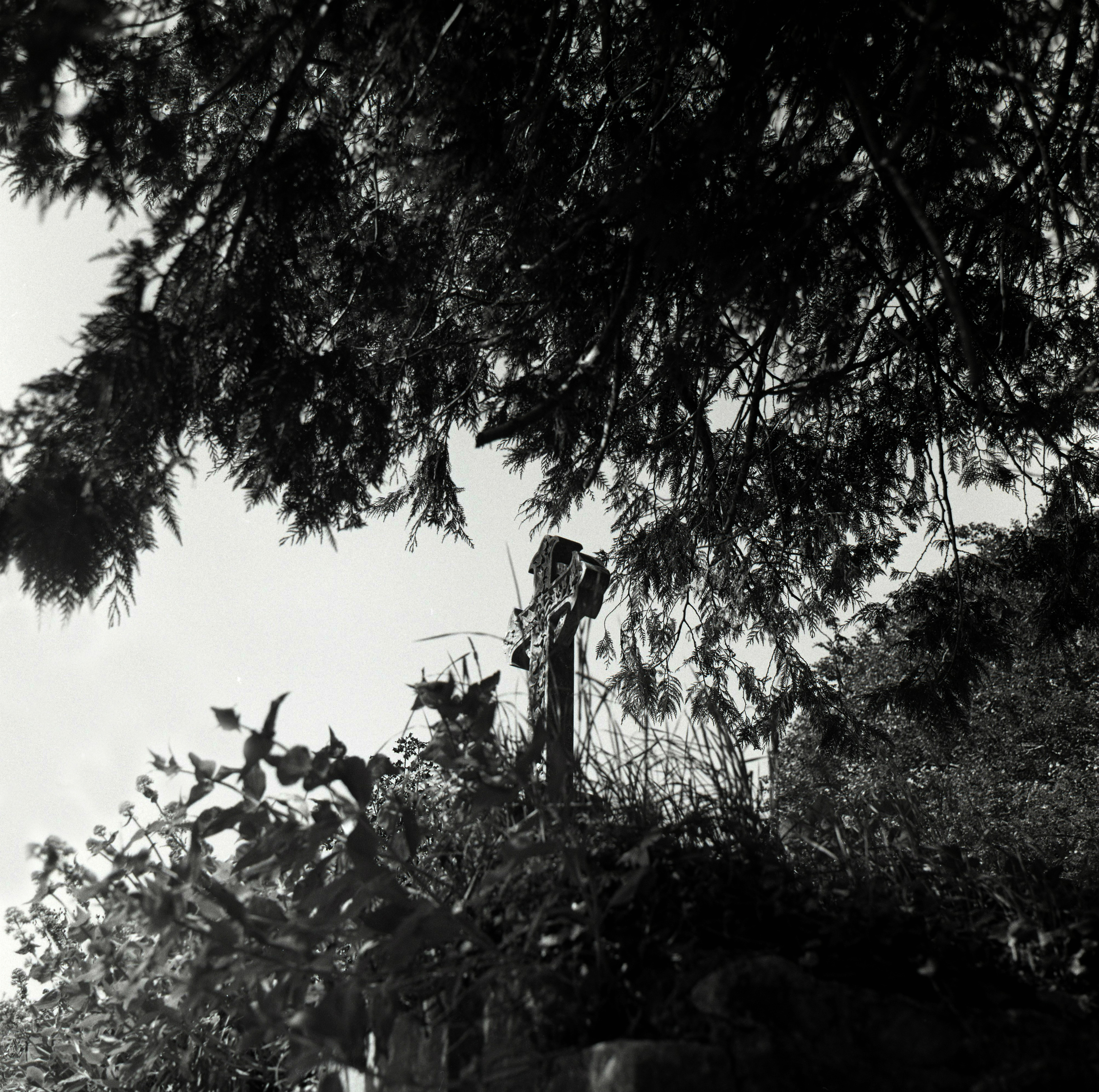


Every Leaf Has Its Autumn creates a quiet atmosphere of
contemplation amongst a large world of grief. The title refers to an inscription on a grave
featured in one of the images. I found the inscription both hurtful and
optimistic, it speaks of someone attempting to cope with a now empty space in
their lives, and also of acceptance of this loss as an inevitable and natural
process. These images evoke the feeling
that something is missing while also being a silent acknowledgement and
meditation of human relationships, loss, light, and starting anew, in nature
and in every aspect of our lives. The images taken outside of the graveyard
touch on the symbolism of the light that we notice in our daily lives, the
sunlight that gives us hope and makes such a difference to our minds, and
highlighting the memories held and experiences we have had in such familiar
places.